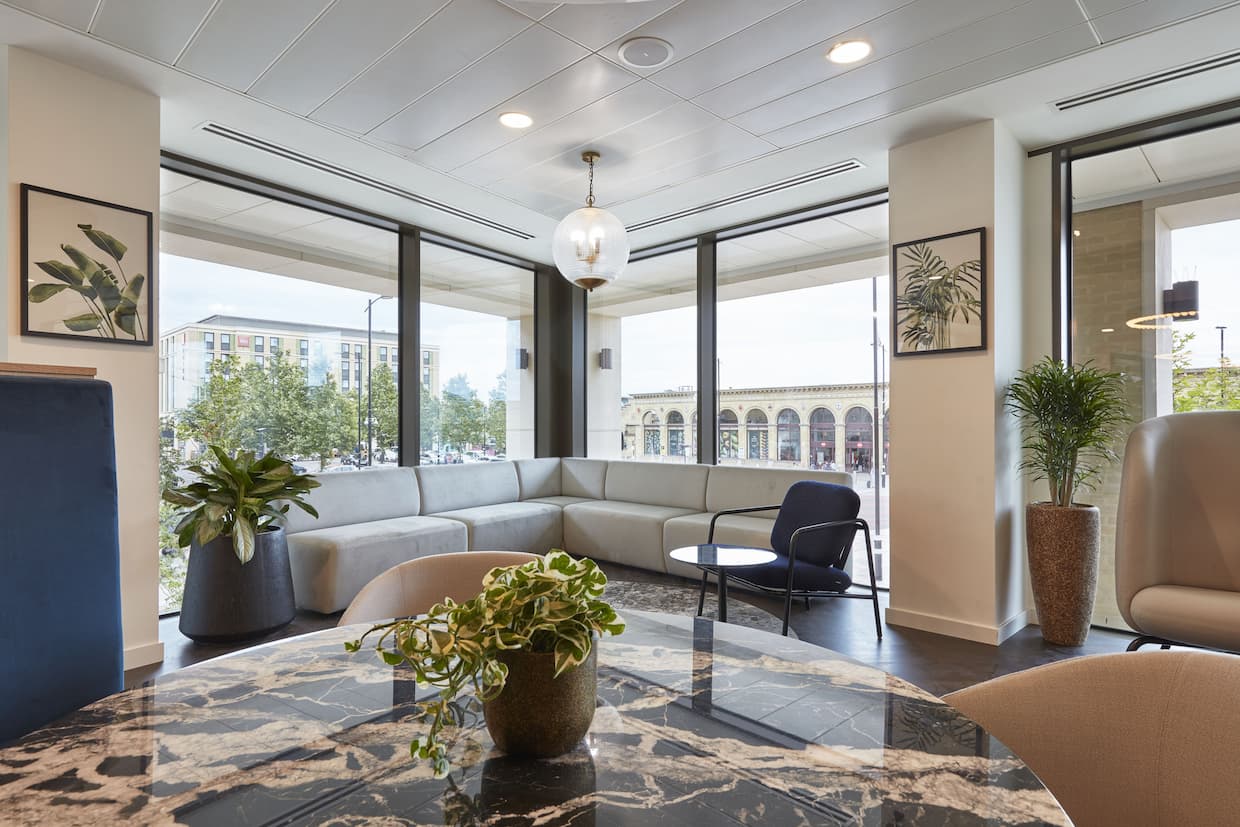
Selecting the right commercial office furniture is about much more than filling an office with desks, chairs and storage. Furniture influences how employees work, collaborate and interact with their surroundings, while also contributing to workplace comfort, productivity and the overall impression a business creates.
For organisations planning an office refurbishment, relocation or workplace redesign, furniture selection should be part of the wider design process. The right combination of ergonomic workstations, collaborative furniture, meeting facilities and breakout seating can create an environment that supports employees while making efficient use of available space.
Commercial office furniture is also a long-term investment. Durability, adaptability, sustainability and ongoing maintenance all influence its value, particularly as businesses respond to changing working patterns and future growth.
With so many options available, understanding the practical requirements of your workplace is essential. From ergonomics and materials to technology integration and supplier support, several factors should guide your decisions when choosing commercial office furniture.
Employee comfort should be a priority when selecting office furniture, particularly for staff who spend much of their working day at a desk. Poorly designed workstations can contribute to discomfort, fatigue and musculoskeletal problems, while furniture that supports different body types and working preferences can help create a healthier working environment.
Ergonomic furniture should allow employees to adjust their working position rather than forcing them to adapt to fixed furniture dimensions.
An ergonomic office chair should provide appropriate support throughout the working day. Features such as adjustable seat height, lumbar support, armrests and seat depth allow employees to adapt the chair to their individual requirements.
Good lumbar support helps maintain the natural curvature of the spine, while adjustable armrests and seating positions can reduce unnecessary strain on the shoulders and upper body.
For businesses with shared workstations or hot-desking arrangements, adjustability is particularly important because several employees may use the same chair throughout the week.
Height-adjustable desks allow employees to alternate between sitting and standing, introducing greater movement and flexibility into the working day.
Rather than remaining in one position for extended periods, employees can adjust their workstation to suit different tasks and personal preferences. This can help reduce prolonged sedentary behaviour and encourage more varied working postures.
However, standing continuously is not necessarily better than sitting. The objective is to provide opportunities to change position regularly while maintaining comfortable working arrangements.
Sit-stand desks can be particularly useful within flexible workplaces, where furniture needs to accommodate different users and working styles.
Even a well-designed office chair cannot compensate for an incorrectly configured workstation. Desk height, monitor positioning and access to equipment all influence comfort.
Monitors should generally be positioned directly in front of the user, with the top of the visible screen at or slightly below eye level, depending on individual requirements. Keyboard and mouse placement should allow the shoulders to remain relaxed and the wrists to adopt a comfortable position.
Monitor arms, adjustable desks and suitable accessories can help employees achieve an appropriate workstation setup.
A well-planned office interior design scheme should account for these ergonomic requirements alongside the wider layout, lighting and working environment.
Commercial office furniture experiences considerably more frequent use than furniture intended for domestic environments. Desks, chairs, meeting tables and storage systems must withstand everyday wear while maintaining their appearance and functionality.
Choosing durable products can reduce replacement costs, minimise disruption and provide better long-term value.
Material selection should reflect the intended use of each piece of furniture.
Desks and meeting tables may feature laminate, timber veneer, solid wood or other engineered surfaces, while seating can incorporate metal frames, moulded components and durable upholstery.
High-pressure laminates and other resilient finishes are often suitable for heavily used work surfaces, while upholstered seating should be assessed for abrasion resistance, cleanability and expected usage.
The most appropriate material will depend on the environment. Furniture for a busy collaborative area may require different specifications from executive offices, reception spaces or occasional meeting rooms.
Furniture that is easy to maintain helps preserve the appearance of a workplace and reduces the time required for routine cleaning.
Scratch-resistant finishes, stain-resistant upholstery and durable work surfaces are particularly valuable in shared offices, meeting rooms and breakout areas.
Businesses should also assess how materials respond to everyday cleaning products. Some finishes require specialist care, while others are designed to tolerate frequent cleaning without deterioration.
Selecting appropriate materials at the outset can help maintain a consistent appearance throughout the furniture’s working life.
Manufacturer warranties and recognised product standards provide useful information about furniture quality and expected performance.
Commercial office chairs and desks should be assessed against relevant safety, strength and durability requirements. Standards such as BS EN 1335 for office work chairs and BS EN 527 for office work tables can help inform purchasing decisions.
Warranty terms should also be reviewed carefully, including the length of cover, exclusions and availability of replacement components.
COEL’s furniture specialists can help businesses assess suitable products, specifications and manufacturer support, ensuring furniture selections align with both immediate requirements and long-term expectations.
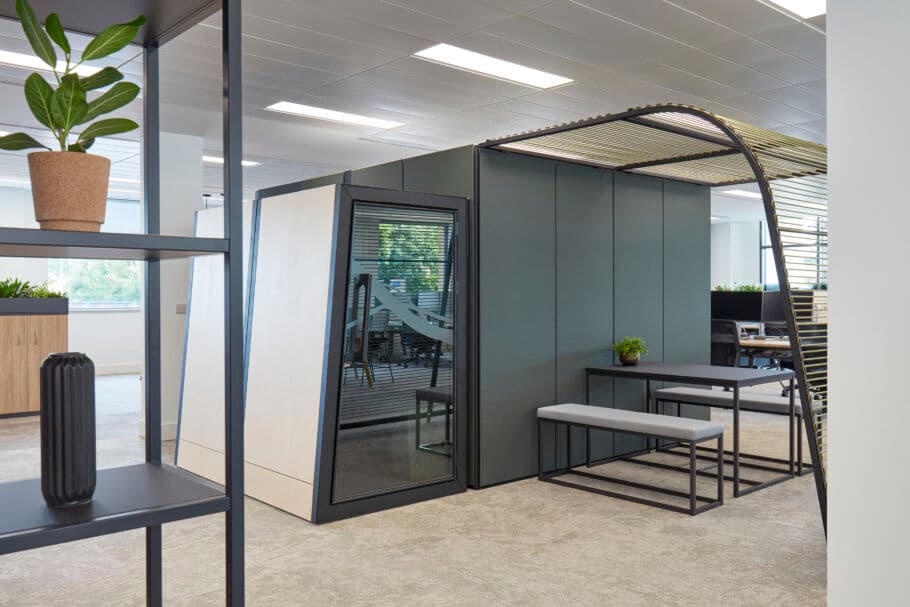
Modern workplaces need to accommodate changing team structures, hybrid working arrangements and evolving business requirements.
Furniture that can be adapted, relocated or reconfigured offers greater flexibility than fixed installations, particularly where businesses anticipate future growth or changes in how their office is used.
Modular collaborative office furniture allows businesses to rearrange workstations, seating and shared spaces without replacing entire furniture installations.
Bench desks can be expanded or reorganised as teams grow, while modular seating can create different arrangements for informal meetings, collaboration and social interaction.
This flexibility is particularly valuable in workplaces where teams regularly change size or where departments need to share facilities.
Furniture should also complement the wider office space planning strategy, ensuring layouts can adapt without compromising circulation, accessibility or employee comfort.
Mobile furniture provides another level of adaptability, allowing spaces to be rearranged for different activities.
Desks and tables fitted with suitable castors can be repositioned for workshops, training sessions and collaborative projects. Movable partitions and acoustic screens can create temporary divisions between working areas without requiring permanent building alterations.
These solutions are especially useful in multi-purpose environments where the same space may accommodate individual work, team meetings and presentations.
However, furniture mobility should be balanced with stability, appropriate cable management and safe access to power supplies.
Furniture that serves more than one purpose can help businesses maximise available floor space.
Examples include storage-integrated workstations, meeting tables with built-in power connections, seating with integrated storage and adaptable furniture for breakout areas.
Multi-functional pieces are particularly useful in smaller offices, where every area needs to contribute to the overall functionality of the workplace.
They can also reduce unnecessary clutter and help create a more organised environment, provided the furniture remains practical for its intended activities.
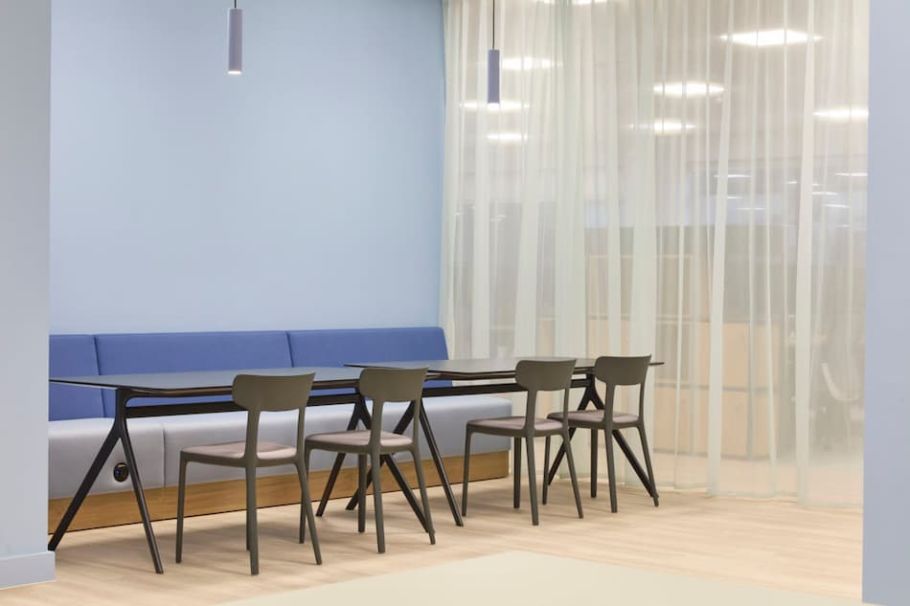
Office furniture contributes significantly to the visual identity of a workplace. Colours, materials, finishes and furniture styles influence how employees and visitors experience the environment.
A cohesive design scheme can reinforce a company’s brand, communicate its values and create a workplace that feels distinctive rather than generic.
Furniture colours and finishes should complement the wider interior design scheme rather than being selected independently.
Brand colours can be incorporated through upholstery, feature seating and selected furniture elements, while neutral finishes may provide a practical foundation for workstations and larger installations.
Materials such as timber, metal, fabric and glass also influence the character of a space. Natural finishes can create warmth, while contemporary materials and clean lines may support a more technical or minimalist aesthetic.
The aim is to create a balanced environment that reflects the organisation without overwhelming employees with excessive colour or visual detail.
Furniture style should reflect the company’s identity, working culture and the impression it wants to create.
Technology and creative businesses may favour contemporary furniture with flexible layouts and informal seating. At the same time, professional services organisations may require a more refined aesthetic that balances traditional expectations with modern functionality.
However, industry alone should not determine furniture selection. A law firm may want a contemporary collaborative environment, while a technology company may prefer warmer, more understated interiors.
The most successful schemes reflect the individual organisation rather than relying on assumptions about its sector.
A consistent design approach helps create visual continuity between workstations, meeting rooms, breakout spaces and reception areas.
This does not mean every piece of furniture must match. Different areas can have their own character while sharing complementary materials, finishes and design details, with bespoke office furniture helping to reinforce a consistent brand identity.
Consistency is particularly important for businesses occupying multiple floors or locations, where a recognisable design language can reinforce brand identity and provide a familiar employee experience.
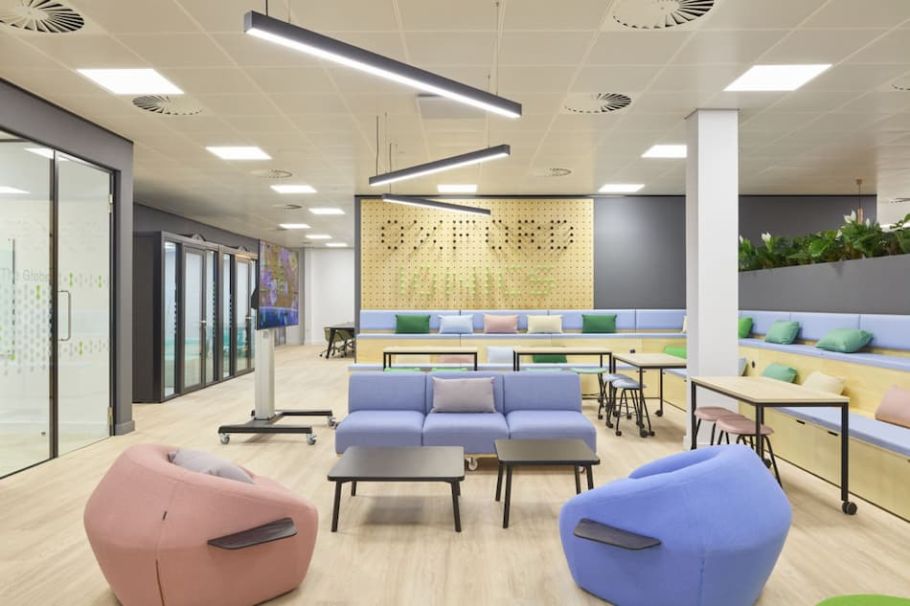
COEL’s work with Oxford Ionics demonstrates how furniture selection can contribute to a distinctive workplace that reflects a company’s identity and ambitions.
As a rapidly growing quantum computing specialist, Oxford Ionics required a headquarters that would support innovation, collaboration and future growth.
The workplace design drew inspiration from the relationship between human behaviour and quantum mechanics, creating an environment that encourages creativity and problem-solving.
Furniture, materials and interior finishes were selected to complement the wider design concept, helping create a cohesive workplace that balances visual impact with everyday functionality.
The result is an inspiring environment that reflects Oxford Ionics’ position as an innovator while providing employees with spaces to collaborate, concentrate and connect.
Sustainability has become an important consideration in commercial furniture procurement, particularly for businesses seeking to reduce environmental impact and support wider ESG objectives.
Furniture choices influence resource consumption, waste generation and the environmental performance of a workplace throughout its lifecycle.
Rather than focusing solely on individual materials, businesses should assess how furniture is manufactured, transported, maintained and eventually reused or recycled.
Furniture manufactured using recycled or responsibly sourced materials can help reduce demand for virgin resources.
Products may incorporate recycled metals, plastics, reclaimed timber or responsibly sourced wood-based materials. However, recycled content alone does not necessarily make a product sustainable.
Durability, repairability, transport requirements and expected lifespan should also influence purchasing decisions.
For businesses undertaking office refurbishments, retaining suitable existing furniture can sometimes provide greater environmental benefits than purchasing new products, even where those replacements contain recycled materials.
Recognised environmental certifications can provide useful evidence when evaluating furniture products and suppliers.
FSC certification can help verify responsible sourcing of timber and wood-based materials, while GREENGUARD certification addresses chemical emissions from products.
Cradle to Cradle Certified assesses products against a broader set of sustainability criteria, including material health, circularity and environmental management.
These schemes assess different aspects of environmental performance, so businesses should understand what each certification covers rather than treating them as interchangeable guarantees of sustainability.
Environmental Product Declarations may also provide information about the lifecycle impacts of specific furniture products.
A circular approach to furniture procurement prioritises extending product life, reducing waste and keeping materials in use for as long as possible.
Furniture designed for repair, refurbishment and component replacement can offer significant advantages over products that must be discarded when individual parts fail.
Businesses should assess whether manufacturers offer spare parts, refurbishment services or take-back arrangements.
At COEL, sustainability forms part of our wider approach to workplace design and delivery. We work with suppliers who share our environmental values and support furniture reuse and recycling wherever practical.
These principles help businesses create workplaces that remain functional and adaptable while reducing unnecessary environmental impact.
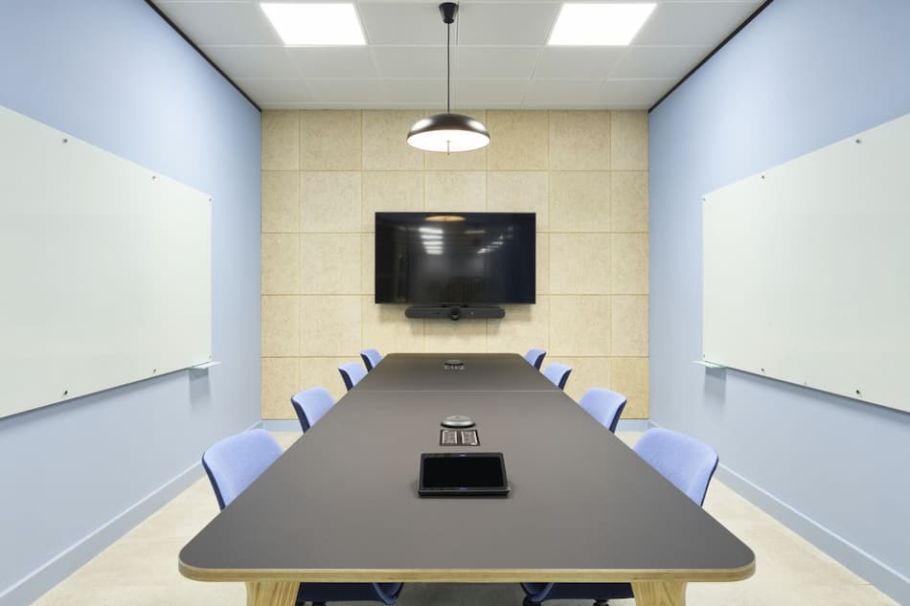
Technology is central to the way modern offices operate, particularly where employees rely on digital collaboration, video conferencing and shared workstations.
Furniture should support these requirements without creating unnecessary clutter or limiting future flexibility.
Desks and meeting tables with integrated power access can improve functionality by making it easier for employees to connect laptops, monitors and other equipment.
Cable management systems help keep work surfaces organised while reducing exposed wiring and simplifying workstation maintenance.
For height-adjustable desks, cables must also accommodate movement between sitting and standing positions without becoming stretched or damaged.
Electrical requirements should be planned alongside furniture layouts to ensure suitable access to power and data connections throughout the workplace.
Modern workstations may incorporate monitor arms, docking facilities, adjustable equipment supports and integrated charging solutions.
These features are particularly useful in shared working environments, where employees need to connect their equipment quickly and adjust their workstation to suit individual requirements.
Some specialist seating products also incorporate sensors and posture feedback technology. However, these features should be evaluated against practical ergonomic requirements rather than treated as essential replacements for properly adjustable furniture.
For most workplaces, reliable equipment, appropriate workstation configuration and employee guidance will provide a stronger foundation for comfortable working.
Acoustic meeting pods and phone booths have become valuable additions to many open-plan offices, providing enclosed environments for video calls, focused work and small meetings.
These spaces can help reduce noise disturbance and offer greater privacy than open collaborative areas.
They may also benefit employees who prefer lower levels of sensory stimulation, including some neurodivergent individuals. However, individual requirements vary, and acoustic pods should form part of a wider range of working environments.
When selecting meeting pods, businesses should assess acoustic performance, ventilation, lighting, accessibility and technology connectivity.
Their location within the office is equally important, ensuring they remain convenient to use without obstructing circulation or creating congestion around busy working areas.
Commercial office furniture represents a significant investment, particularly for businesses furnishing an entire workplace or undertaking a substantial refurbishment.
A successful procurement strategy should balance initial expenditure with durability, functionality and long-term value.
The lowest purchase price does not always represent the best value.
Furniture that requires frequent replacement or maintenance can create additional costs over time, particularly when disruption, delivery and installation expenses are included.
Businesses should assess expected lifespan, warranties, repairability and suitability for commercial use when comparing products.
This approach helps identify opportunities to invest in durable furniture without unnecessarily increasing the overall project budget.
Not every furniture item requires the same level of investment.
Workstations, ergonomic chairs and frequently used meeting furniture should generally receive priority because of their impact on employee comfort and everyday operations.
Furniture used less frequently, such as occasional seating or decorative pieces, may offer opportunities for more economical specifications.
Budget planning should also account for delivery, installation, technology integration and potential future alterations.
Careful furniture planning to maximise space and reinforce brand identity can help businesses make better use of their investment without compromising the overall workplace design.
Choosing the right commercial furniture supplier is just as important as selecting the products themselves.
A reliable supplier should provide clear product information, appropriate warranties and practical support throughout procurement, delivery and installation.
For larger office projects, managing multiple manufacturers and suppliers can become complex. Working with an experienced furniture consultant can simplify this process and help ensure products arrive and are installed in line with the wider project programme.
Businesses should assess supplier experience, product ranges, manufacturer relationships and previous commercial projects.
A supplier with experience in office environments will understand the practical requirements of different workplace settings, from ergonomic workstations and meeting rooms to reception areas and collaborative spaces.
Product samples, technical specifications and warranty information can provide further reassurance before purchasing decisions are finalised.
At COEL, we work with established furniture manufacturers and suppliers to source products that meet the functional, aesthetic and budgetary requirements of each project.
Commercial furniture procurement should not end when the products are delivered.
Warranty administration, replacement components, repairs and ongoing maintenance can all influence the long-term performance of an office furniture installation.
Businesses should establish how defects will be managed, whether replacement parts are available and which services are included within manufacturer warranties.
Reliable after-sales support can help minimise disruption and extend the useful life of furniture.
Furniture delivery and installation require careful coordination, particularly when working within occupied offices or alongside wider refurbishment projects.
Professional installation helps ensure furniture is assembled correctly, positioned according to the agreed layout and ready for employees to use.
Larger projects may also require phased deliveries, removal of existing furniture and coordination with electrical, IT and fit-out contractors.
COEL manages furniture procurement, delivery and installation as part of our integrated workplace services, helping businesses avoid the challenges of coordinating multiple suppliers independently.
Selecting commercial office furniture requires a balance of comfort, durability, flexibility, aesthetics and long-term value.
The right furniture should support employees throughout their working day while reflecting the identity and ambitions of the business. Ergonomic workstations, adaptable collaborative areas and technology-enabled meeting spaces can all contribute to a more functional and inspiring workplace.
However, furniture selection is most effective when integrated into the wider workplace design process. Understanding how employees use their environment, anticipating future requirements and choosing products suited to everyday activities helps businesses make informed investment decisions.
At COEL, we bring together workplace design, furniture expertise and installation services to create offices that work for the people who use them.
With over 30 years of experience, our team can help you select, source and install commercial office furniture that balances practical requirements with a distinctive design scheme.
Whether you are furnishing a new office, refreshing an existing workplace or planning a complete fit-out, COEL can help you create an adaptable environment that supports productivity, collaboration and employee wellbeing.
Prefer an AI Summary?