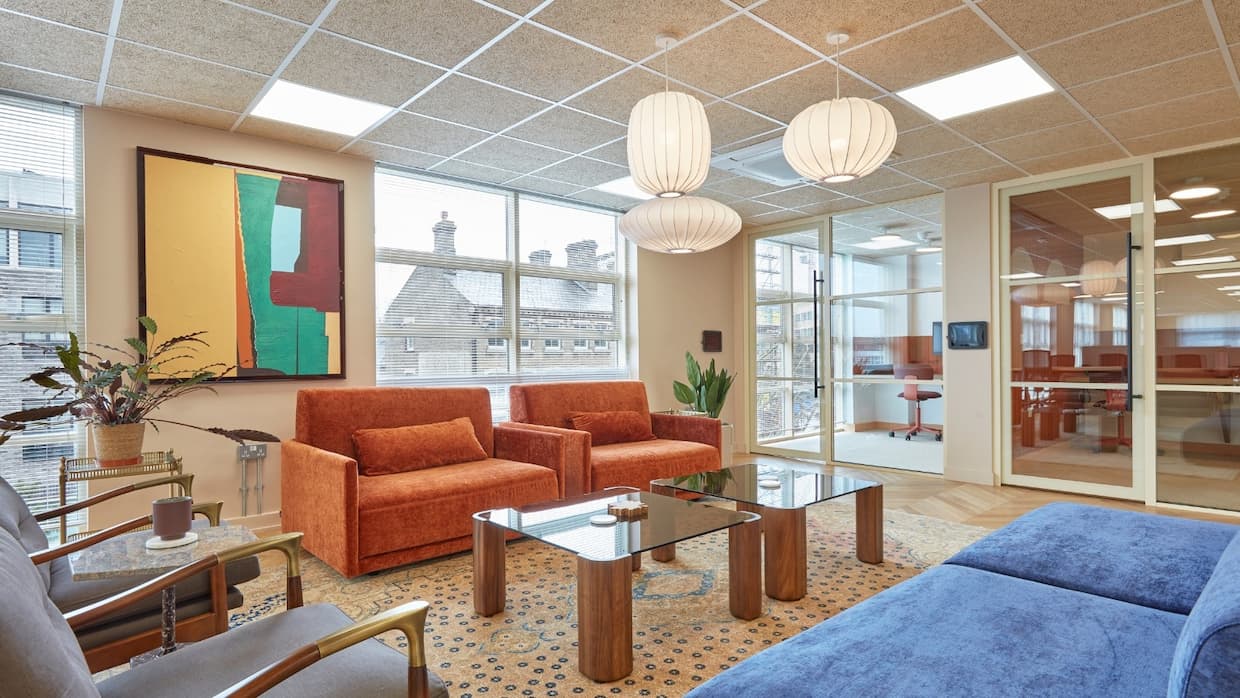
A rebrand can change the way a business presents itself to customers, employees and the wider market. New visual identities, messaging and digital assets may be the most visible elements, but for businesses with a physical workplace, the office is also an important part of that identity.
If the brand has moved forward but the workplace still represents the company of five or ten years ago, there can be a noticeable disconnect. Commercial interior design provides an opportunity to bring the two back together, translating a brand into a physical environment without simply filling an office with logos and corporate colours.
Done well, an office rebrand can influence the entire workplace experience. Layout, materials, furniture, lighting, graphics, meeting spaces and social areas can all communicate something about the organisation while creating a functional environment for the people who use it every day.
Office rebranding is not simply an exercise in replacing signage or applying a new colour palette. It involves looking at how the organisation has changed and deciding whether its physical environment still supports the business it has become.
A company may have repositioned itself, entered new markets, grown significantly, merged with another business or introduced a completely new visual identity. Working practices may also have changed, particularly where hybrid working, increased collaboration or different team structures have altered the purpose of the office.
This makes workplace design an important part of a wider rebrand.
The starting point should be an assessment of the organisation itself. Its brand, culture, people, working practices and plans can then inform decisions about everything from office planning and circulation to finishes, furniture and individual spaces.
Rather than designing around an identity in isolation, the aim is to create an office that feels authentically connected to the business.
Brand identity can be expressed within a workplace in many different ways.
Colour is an obvious example, but relying too heavily on brand colours can result in a space that feels overly corporate or visually repetitive. A more considered commercial interior design scheme can draw on the organisation’s wider identity.
Materials, textures, lighting, architectural details, graphics, artwork and furniture can all contribute. The shape and character of spaces can also communicate brand values. A business built around innovation may want areas that encourage experimentation and interaction, while an organisation where confidentiality is essential may require a very different balance between openness and privacy.
COEL’s office interior design process considers functionality, sustainability, adaptability and budget alongside the creation of a design scheme that is recognisably individual to the client.
This allows branding to become part of the environment rather than something applied to it afterwards.
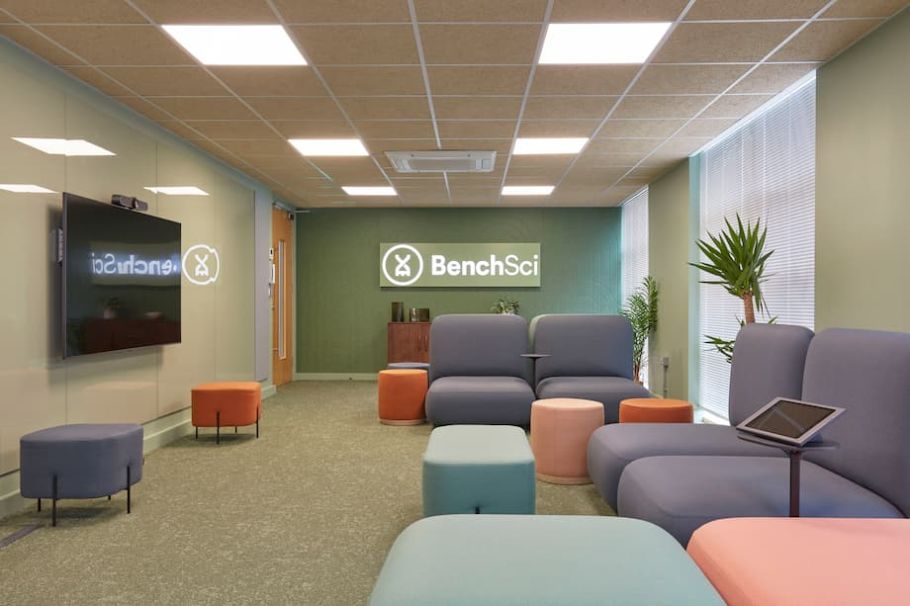
For many organisations, the office is one of the few places where employees, clients, partners and prospective recruits experience the brand physically.
That makes consistency important, but consistency does not mean every area needs to look identical.
Reception may need to create a strong initial impression, while meeting rooms should support professional interactions with clients. Collaborative spaces can communicate energy and openness, whereas focus areas may deliberately adopt a calmer visual language.
The design should change according to the purpose of each area while still feeling part of the same workplace.
This approach can be particularly valuable for businesses occupying larger offices or multiple floors, where different departments and working environments need their own character without becoming disconnected from the overall brand.
A successful branded office should not feel as though it could belong to any business.
Generic workplace trends can inspire, but copying the same colours, furniture styles, and breakout areas seen elsewhere can quickly dilute the individuality a rebrand is meant to create.
This is where bespoke design thinking becomes particularly valuable.
At Oxford Ionics, for example, COEL developed a workplace with a strong sense of brand, carrying accented brand colours through the kitchen, furniture, finishes, manifestations and bespoke elements. The wider design concept also drew inspiration from parallels between human behaviour and quantum mechanics, connecting the environment with the nature and ambitions of the business.
The result demonstrates how a branded office can go much further than logos and colour. The design itself can tell part of the company’s story.
There is an important distinction between how a company looks and how it works.
An office rebrand that concentrates entirely on visual identity can miss an opportunity to strengthen company culture. If collaboration, flexibility, wellbeing or sustainability are important organisational values, employees should be able to experience those principles within the workplace.
A business that promotes collaboration, for example, may need informal meeting points, project areas and shared social spaces. A company that places wellbeing at the centre of its employee proposition may prioritise natural light, acoustic comfort, ergonomic furniture, and quieter areas away from busy work zones.
The workplace therefore becomes a practical expression of the organisation’s values rather than simply a backdrop for its branding.
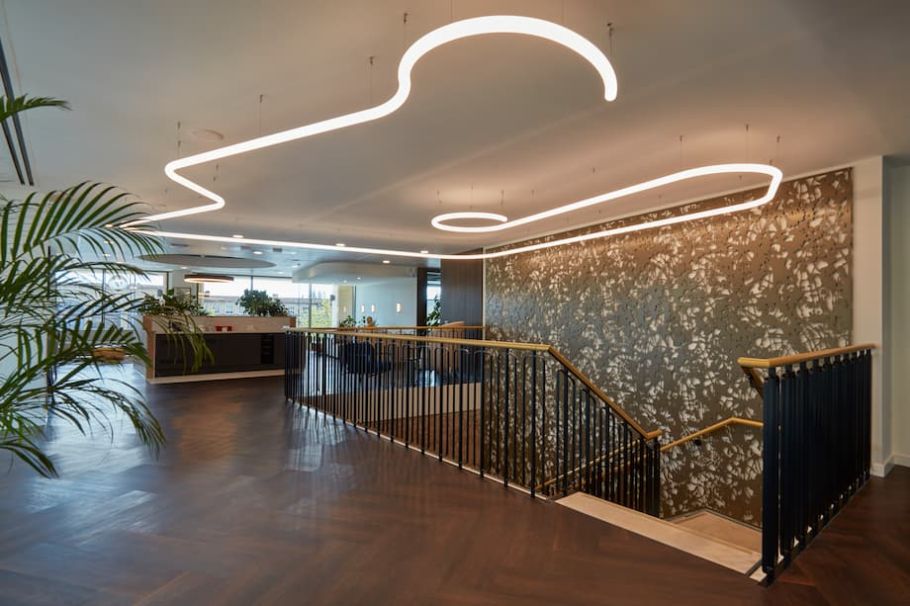
Employees experience an office far more frequently than most clients or visitors, making them one of the most important audiences for any workplace rebrand.
Changes to the environment should therefore improve the working experience rather than prioritising aesthetics alone.
Stakeholder engagement can provide useful insight into how existing spaces are performing. Employees may identify shortages of meeting rooms, distracting acoustics, limited quiet-working areas, unsuitable furniture or underused parts of the office that would not necessarily be apparent from floor plans alone.
These findings can inform a more effective approach to office space planning, ensuring that the rebrand also addresses practical workplace challenges.
This is especially important when a rebrand coincides with relocation or refurbishment, as businesses can reconsider how the entire office functions rather than simply changing its appearance.
The workplace can communicate a great deal before a meeting has even started.
For clients, investors, prospective employees and other visitors, reception and front-of-house areas provide an immediate impression of the organisation. Design quality, attention to detail and the overall character of the environment can reinforce the qualities a business wants associated with its brand.
That does not necessarily mean creating an extravagant reception.
The right response depends on the organisation. A creative agency may want to express personality and energy, while a professional services business may favour a sophisticated and reassuring environment. A technology company might place innovation and product development at the centre of the visitor experience.
The important point is that the physical experience should feel consistent with the organisation people have encountered online, through marketing or during previous interactions.
Furniture has both a practical and visual role within a branded workplace.
Desks, meeting tables, task chairs, soft seating, acoustic booths and bespoke joinery all influence how a space is used. Their materials, colours, forms, and finishes also contribute to the wider interior scheme.
Selecting office furniture as part of the design process rather than as a final purchasing exercise can create a much more cohesive result.
Existing furniture should not automatically be discarded either. Where appropriate, good-quality pieces can be reused, reconfigured or incorporated alongside new furniture, supporting both budget and sustainability objectives.
Bespoke furniture can also introduce subtle brand details where standard products cannot provide the required dimensions, functionality or visual character.
Technology is now integral to the way many offices operate, particularly where hybrid meetings and flexible working are commonplace.
Meeting-room technology, screens, video conferencing, power, connectivity and room-booking systems should therefore be considered during the design stage.
Early coordination makes it possible to integrate these requirements more discreetly, rather than adding equipment, cabling and power points after the interior scheme has been developed.
Technology can then support the workplace without visually dominating it.
A new corporate identity does not necessarily require an entirely new interior.
Assessing what can be retained, repurposed or refurbished can reduce unnecessary waste while allowing investment to be concentrated where it will have the greatest effect.
Existing furniture, partitions and finishes may have further useful life. New materials can also be selected with durability, responsible sourcing and future reuse in mind.
For organisations placing greater emphasis on environmental responsibility within their brand, these decisions are particularly significant. A workplace that visibly contradicts sustainability commitments can undermine the message being communicated elsewhere.
The environmental choices made during an office fit-out or refurbishment can therefore form part of the brand story in their own right.
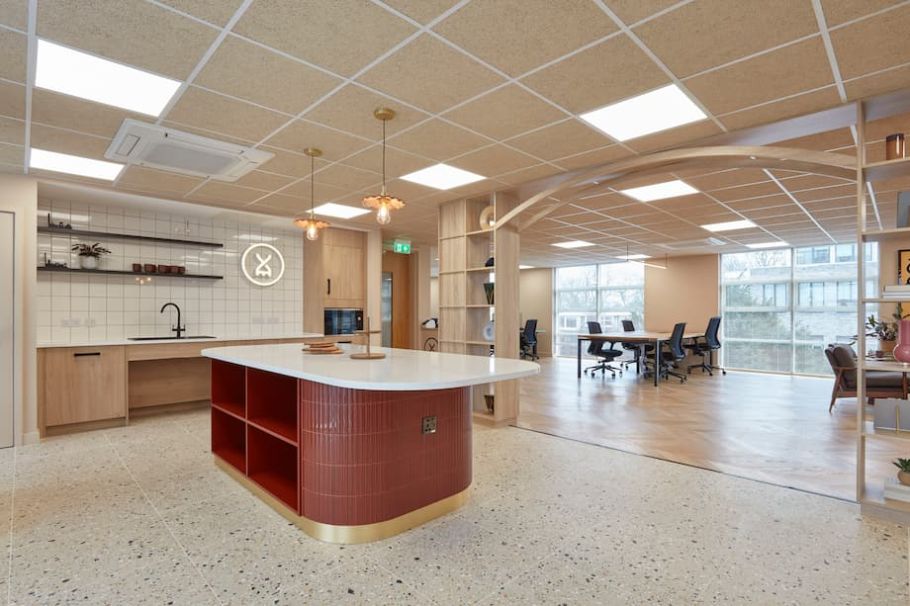
Rebranding is often associated with change and growth, so the resulting workplace should not be designed solely around today’s requirements.
Headcount may increase. Departments can change. Hybrid-working patterns may evolve, and spaces originally intended for one purpose may need to perform another role in the future.
Adaptability should consequently form part of the design brief from the beginning.
Modular furniture, flexible meeting spaces, movable elements and carefully considered infrastructure can make future changes easier to accommodate. The objective is to create a workplace that expresses the company’s identity now without becoming restrictive as the organisation develops.
COEL’s project for Crafted shows how brand, culture and workplace requirements can come together within one interior.
As the digital marketing agency expanded, its new headquarters needed to support a growing team and hybrid working while strengthening connectivity and creativity. Crafted’s distinctive identity was woven through the interior, including natural elements, branded details and furniture choices, creating a workplace that feels specific to the agency rather than a generic commercial office.
The project also demonstrates an important principle of office rebranding: visual identity works best when it is combined with an understanding of the people using the space and the work taking place within it.
A workplace rebrand can involve far more than interior styling. Space planning, interior design, construction, mechanical and electrical services, furniture, technology and relocation may all need to be coordinated before the finished environment is ready to use.
Bringing these elements together from an early stage can help protect the integrity of the original design while keeping practical requirements, programme and budget under control.
COEL provides an integrated plan, design, build, furnish and maintain service, allowing each stage of a commercial workplace project to be considered as part of the same process.
Our team works with businesses to understand their brand, people, working practices and future objectives before translating those requirements into a workplace that is functional, adaptable and recognisably theirs.
If a rebrand, relocation or refurbishment has created an opportunity to rethink your office, talk to COEL about your workspace and the next stage of your business.
Prefer an AI Summary?