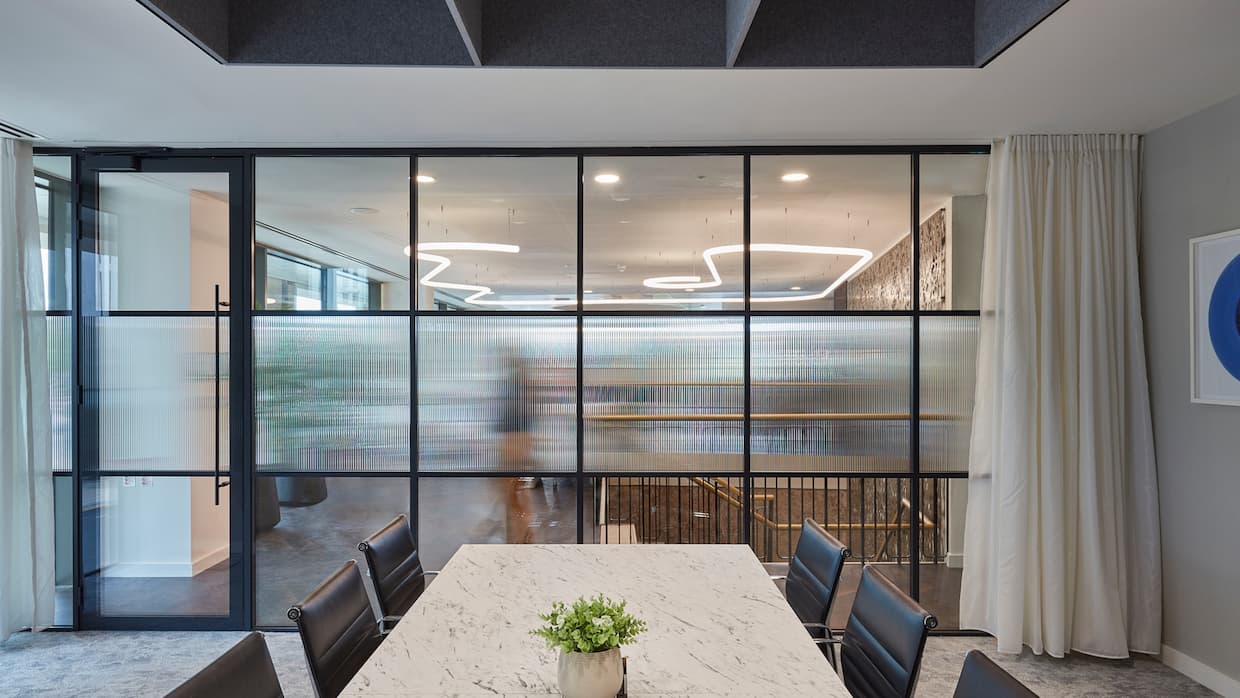
In 2023, the workforce continued to return to the office, and employers began thinking more creatively about what the future of the workplace would look like.
There was, and we suspect that there will continue to be, avid discussion around the new concept of the office – a space truly centred on the human needs of the workforce. As we predicted, employee wellbeing, biophilic design and collaboration were at the heart of office design in 2023.
But what does office design in 2024 look like?
We asked our design team for their top predictions for office interior design in 2024.
As work styles and preferences shift, more offices will move away from fixed desks to meet the growing need for flexible seating.
Drop-in and touch-down points are likely to become more prominent in office design, as are collaborative spaces that enable teams to work more efficiently and effectively together.
These spaces directly respond to the rise of hybrid working, but they also encourage collaboration between teams and across departments.
Sustainable office design is not a tick-boxing exercise. From the materials you choose to the lighting you install, from the process you undertake onsite to the culture you foster in your workspace, sustainability should be considered from the outset of the project.
As new techniques continue to develop, we expect to see a substantial rise in materials, finishes, and furniture that are truly sustainable. By this we mean retaining the product in its natural state to minimise environmental impact. One example we recently came across is acoustic wall panels made entirely from mushrooms!
Whilst mushrooms might not be the right solution for every client, we expect to see more and more consideration of these thoughtful products and finishes being implemented in workplace design.
Despite significant efforts and in some cases even ‘return to office mandates’, employers have been struggling to entice their employees back into the office.
Why the reluctance to return to the office?
Research shows that when employees compare home and office work environments, they often conclude that the comfort and flexibility of working from home can’t be easily replaced.
As a result, we expect to see office designs begin to mimic the home office environment even more in 2024 – particularly when it comes to privacy.
There will be increased focus on adequate individual or focused workspaces that mimic the privacy and comfort an employee would have when working from home, e.g., quiet areas to enable online meetings.
We will likely also see a shift in how the client branding is incorporated into the design. We expect this will be softer and more refined.
In 2024, office design will continue to focus on leveraging light, biophilic design and furniture to maximise employee satisfaction, wellbeing, and productivity – but it will also go beyond it.
We expect employers to consider workspace location even more in 2024. Access to gyms, transportation links, restaurants, shops, or even a place to go for a walk and be immersed in nature are all aspects employees will look for, as these can drastically increase employee wellbeing and retention.
This will allow offices to become dynamic environments that can meet the staff’s varying needs throughout the day.
As we become more aware of the diverse needs of our varied workforces, we understand that not everyone will perform a task the same way.
Neurodivergent employees can struggle in a traditional office environment, and to design and deliver an inclusive workplace, it is essential to analyse the differing needs and approaches of your staff.
Ideas include;
2024 will be the year offices provide staff with an elevated, more tailored experience. >
Planning the right office space means catering to a variety of needs and making the most of the materials and tools available to today’s discerning interior design teams and their clients.
Whether it’s access to public transport, a dedicated space for focused work, or technological advancements and the adoption of artificial intelligence… We expect continued demand for highly tailored, flexible, human-centric spaces.
Katie Oldknow, Head of Design at COEL, commented:
“In 2024, we will continue to incorporate flexibility and enhanced functionality throughout the office landscape.
Sustainability goals and requirements will increase as companies embrace their environmental responsibility. We will look to include more radical sustainable materials as they become more readily available.
We will see a strong palette shift toward warmer tones and softer neutrals, directly influenced by the typical home working environment.
Further recognition of a broad range of needs throughout the working day, building on innovative and sensitive ways of incorporating them into commercial design.
An exciting year ahead!”
Office trends will continue to evolve, but successful workplaces are shaped by more than the latest design ideas. As specialists in commercial design and build, COEL creates environments that balance flexibility, employee wellbeing, collaboration, and brand identity with the practical requirements of each organisation.
Our commercial interior design services bring together workplace insight, space planning, and creative design to create inspiring environments that adapt as teams, technology, and working practices change, helping businesses build workplaces with lasting value.
Prefer an AI Summary?