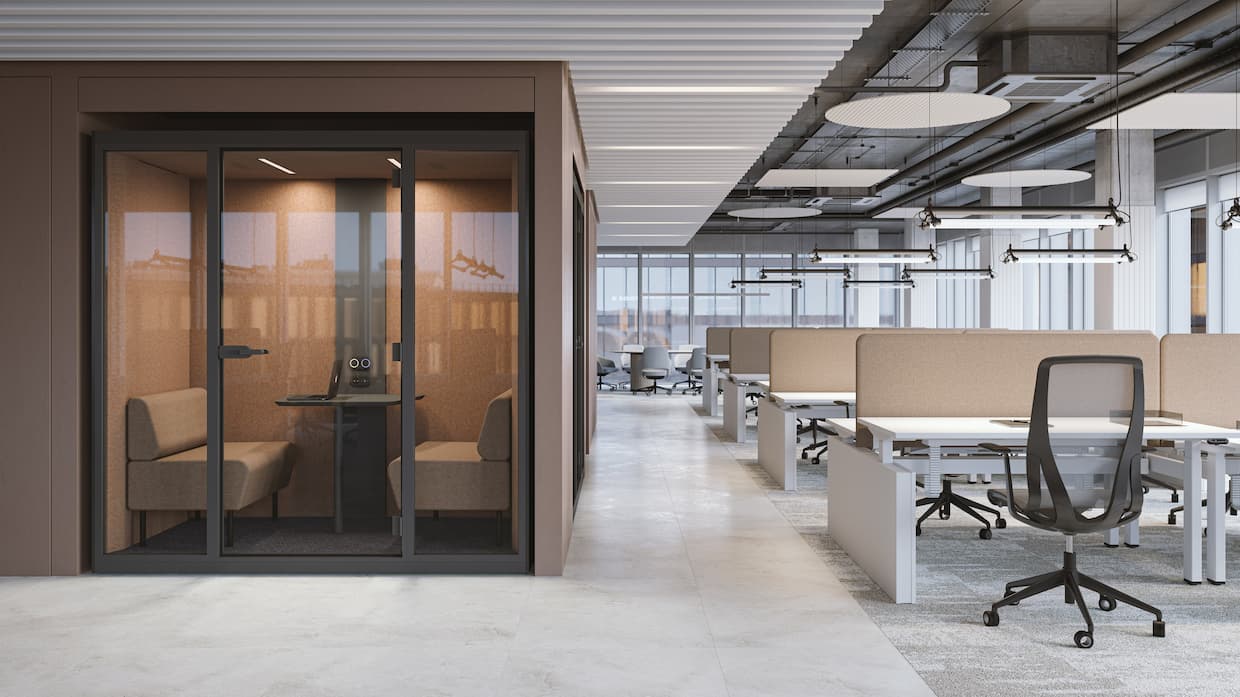
The workplace has changed dramatically over the last few years. Hybrid working, changing employee expectations and evolving business priorities have transformed the way organisations think about their offices. Rather than simply providing a place to work, today’s workplace needs to encourage collaboration, support wellbeing, reflect company culture, and adapt as businesses grow.
Successful office space planning is no longer about fitting the maximum number of desks into the available floor space. It is about creating a workplace that allows people to perform at their best, whether they are collaborating with colleagues, meeting clients, focusing on complex tasks or taking time to recharge.
This shift has led to a more thoughtful approach to workplace design, in which different areas of the office are carefully planned to support various activities throughout the working day. Concepts such as workplace neighbourhoods, microenvironments and pivot spaces enable organisations to create offices that are more flexible, inclusive and better suited to modern ways of working.
At COEL, we believe every workspace should be designed around the people who use it. By understanding your business objectives, company culture, and ways of working, we create inspiring spaces that improve the employee experience while supporting productivity, innovation, and long-term business growth. This people-first approach underpins every stage of our design and fit out process, ensuring each workplace is both practical today and adaptable for tomorrow.
Before considering furniture layouts or meeting room locations, it is essential to understand how your organisation actually works.
Every business is different. Some rely on regular collaboration between departments, while others require quiet spaces for focused work. Some welcome clients into their offices daily, whereas others primarily support hybrid teams who spend part of their week working remotely.
Without understanding these behaviours, businesses risk investing in office space that looks impressive but fails to support the people using it.
Effective workplace planning begins by asking the right questions.
These insights allow workplace designers to create environments that genuinely support how people work, rather than relying on assumptions or traditional office layouts.
One of the biggest changes in office design has been the shift away from assigning a fixed desk to every employee.
With hybrid working now firmly established across many organisations, office occupancy often varies significantly throughout the week. Some areas become overcrowded on collaboration days, while others remain largely unused.
Analysing workplace utilisation helps businesses understand how their existing space performs before making investment decisions. By reviewing occupancy patterns, meeting room usage, collaboration hotspots and employee feedback, organisations can make informed decisions about how their office should evolve.
This evidence-led approach frequently identifies opportunities to introduce more flexible work settings without increasing the overall office footprint.
Traditional office layouts often grouped employees by department, creating rows of desks that reflected organisational structures rather than working styles.
Modern workplaces are increasingly designed around people and the activities they perform throughout the day.
An employee may begin the morning in a quiet focus area, move into a collaborative workshop before lunch, hold client meetings in the afternoon, and finish the day by catching up with colleagues in a social breakout space.
Rather than expecting one desk to support every activity, today’s office provides a variety of environments that employees can choose from depending on the task they are completing.
This flexibility improves productivity while giving employees greater control over how and where they work.
As Katie Oldknow, Senior Interior Designer at COEL, explains:
“It is time to move away from the old-fashioned concept of one-size-fits-all.
Designing your workplace with flexibility and adaptability front of mind can ensure you are addressing the neurodiverse needs of all employees.
By considering the different work styles of your team and creating dedicated spaces for collaboration and agility at the initial stages of planning your office, you can foster a sense of community at work. This, in turn, will enhance your employees’ overall experience of being at work, making them far more likely to want to spend time in the office.”
One of the most effective ways to create a flexible workplace is through office neighbourhoods.
Rather than viewing the office as one large open-plan environment, neighbourhoods divide the workplace into purposeful zones that support different types of work while encouraging collaboration between teams.
Each neighbourhood contains a carefully balanced mix of work settings, allowing employees to move naturally between focused work, informal meetings, collaboration and social interaction without leaving their immediate working area.
Depending on the organisation, workplace neighbourhoods may include:
The objective is not simply to create separate rooms but to establish connected environments where employees have access to everything they need throughout their working day.
This approach supports greater flexibility while reducing unnecessary movement around the office and encouraging spontaneous conversations that often lead to innovation.
Every organisation requires a different balance of spaces, but many successful workplaces incorporate several distinct neighbourhoods.
Designed to encourage teamwork, these spaces feature flexible furniture, writable walls, integrated technology and informal meeting areas where teams can exchange ideas and solve problems together.
Providing quieter environments with improved acoustic performance and reduced distractions, focus neighbourhoods support employees undertaking concentrated work that requires sustained attention.
More than simply kitchen facilities, social neighbourhoods create welcoming spaces where employees can connect, build relationships and strengthen company culture throughout the day.
Flexible training spaces can accommodate workshops, presentations, mentoring sessions, and professional development activities, while easily adapting to other uses when not required.
For organisations that regularly welcome visitors, dedicated client areas help create positive first impressions while providing comfortable environments for meetings, presentations and collaboration.
When carefully planned, these neighbourhoods work together to create a workplace that supports both individual performance and collective success.
When thoughtfully designed, workplace neighbourhoods provide far more than visual appeal. They create environments that encourage people to work more effectively while making better use of available office space.
Collaboration rarely happens by accident. The physical environment plays an important role in bringing people together, encouraging conversations and making it easier for teams to exchange ideas.
Rather than relying solely on formal meeting rooms, neighbourhoods provide a variety of spaces where employees can collaborate naturally, whether that’s around a project table, in a comfortable lounge area or during informal catch-ups over coffee.
This flexibility allows teams to choose the environment that best supports the task at hand.
Different types of work require different environments.
Complex analytical work often benefits from quieter surroundings, while creative workshops thrive in more open and interactive spaces. By providing employees with a choice of work settings throughout the day, organisations enable people to work where they are most productive.
Instead of expecting one desk to accommodate every activity, neighbourhoods recognise that the surrounding environment influences productivity.
Many traditional offices contain spaces that remain underused for large parts of the working week.
By combining multiple work settings within each neighbourhood, businesses can improve utilisation while reducing unnecessary duplication of meeting rooms or dedicated offices.
This approach becomes increasingly valuable as organisations continue to adopt hybrid working patterns and flexible occupancy levels.
Employees increasingly expect workplaces that offer more than just a place to complete daily tasks.
Access to comfortable breakout spaces, quiet focus areas, collaborative environments, and informal social settings contributes to a more enjoyable workday while supporting wellbeing and a stronger workplace culture.
An office that provides choice is far more likely to encourage employees to spend time together, strengthening collaboration and creating a greater sense of belonging.
Every organisation has its own identity, values and ways of working. Successful workplace neighbourhoods should reinforce these characteristics rather than following a standard template.
For some organisations, that may mean creating vibrant collaboration hubs that encourage creativity and innovation. Others may prioritise professional client environments, private meeting spaces or quieter settings that support concentrated work.
Interior finishes, furniture selection, lighting, colour palettes and branding all contribute to creating neighbourhoods that feel authentic to the organisation while supporting employee experience.
The result is a workplace that not only functions effectively but also communicates the company’s culture to employees, clients and visitors alike.
One project that demonstrates the value of workplace neighbourhoods is the Crafted office transformation.
As the award-winning digital marketing agency expanded its team and embraced hybrid working, the brief focused on creating an open, collaborative workspace that encouraged creativity while strengthening connections across the business.
The workplace layout was carefully planned to support collaboration through a variety of flexible work settings, with each area designed to complement the agency’s creative culture. Brand identity was woven throughout the interior, ensuring the physical environment reflected the sophistication of the business and its services.
Rather than simply increasing desk capacity, the project created a workplace where employees could collaborate, innovate and connect more naturally throughout the day. This is exactly the outcome that well-planned workplace neighbourhoods are designed to achieve.
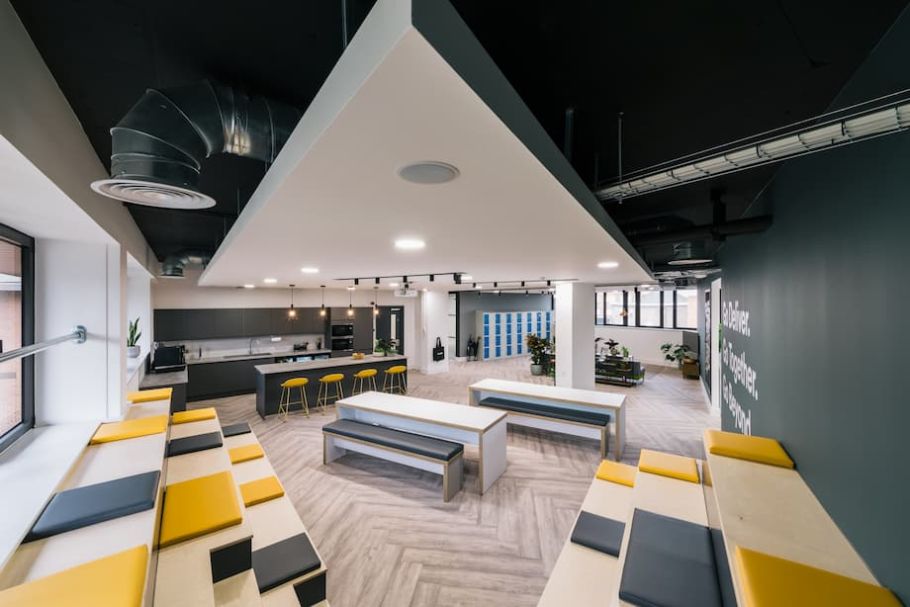
While neighbourhoods organise the workplace into larger functional zones, microenvironments focus on creating smaller, highly specialised spaces within the wider office.
These compact environments provide employees with dedicated settings for specific activities without requiring extensive alterations to the overall workplace layout.
As organisations seek to maximise every square metre of available space, microenvironments have become one of the most effective ways to improve the employee experience while making better use of underutilised areas.
An unused corner can become an acoustic phone booth.
A wide circulation area can be transformed into an informal collaboration point.
An oversized breakout space might accommodate a quiet wellbeing zone or private meeting pod.
These interventions may appear relatively small, but they can have a significant impact on how effectively employees use the workplace throughout the day.
Today’s office needs to support a much broader range of activities than ever before.
Employees regularly switch between focused work, video meetings, collaborative workshops, confidential conversations and informal discussions, often within the same day.
Trying to accommodate every activity from a single workstation is rarely effective.
Microenvironments provide employees with the freedom to move into the most appropriate setting as their work changes throughout the day.
This flexibility reduces distractions, improves concentration and allows the workplace to support a wider variety of working styles.
It also recognises that employees perform differently depending on the environment around them.
There is no single blueprint for creating effective microenvironments. The best solutions are tailored to each organisation’s operational requirements, available space and employee needs.
Some of the most successful examples include:
Private booths provide quiet environments for video calls, confidential conversations and focused individual work without occupying larger meeting rooms.
As hybrid working has increased the number of online meetings held in offices, acoustic booths have become an essential workplace feature.
Not every task benefits from collaboration.
Dedicated focus areas with improved acoustic treatment, comfortable seating and minimal distractions allow employees to complete work requiring concentration, analysis or problem-solving.
These spaces are particularly valuable within open-plan environments.
Small collaboration spaces encourage spontaneous discussions among colleagues without the need to book meeting rooms formally.
Comfortable seating, integrated power and display screens allow teams to gather quickly and continue working efficiently.
Modern workplaces increasingly recognise the importance of employee wellbeing.
Providing comfortable areas where employees can step away from their desks for a short break supports mental wellbeing while helping maintain productivity throughout the day.
Natural planting, softer lighting and comfortable furniture can all contribute to creating restorative spaces within the workplace.
Project teams often require dedicated areas where ideas, drawings and documentation can remain visible over several days or weeks.
Rather than continually setting up and dismantling meeting rooms, project spaces provide an adaptable environment where collaboration can continue uninterrupted.
Introducing microenvironments does not necessarily require expanding your office.
Many organisations already have underutilised areas that can be repurposed to support changing ways of working.
Wide corridors, oversized breakout spaces, redundant storage rooms, or unused corners often offer opportunities to create valuable workplace settings that enhance functionality without increasing the building footprint.
This makes microenvironments particularly attractive for organisations looking to enhance the employee experience while maximising the value of their existing office.
No two employees work in the same way.
Some people thrive in busy, energetic environments where conversation and collaboration happen naturally. Others perform at their best in quieter surroundings with fewer distractions. Increasingly, organisations are recognising that creating a truly inclusive workplace means providing employees with greater choice over where and how they work.
This is particularly important when designing for neurodiverse teams.
A workplace that offers a variety of settings enables employees to select environments that suit both the task they are undertaking and their individual preferences. Rather than forcing everyone into the same open-plan layout, employees can move between collaborative spaces, quiet focus areas, informal lounges and private booths as their work changes throughout the day.
This flexibility benefits the entire workforce, not just those with diagnosed neurodiverse conditions.
Inclusive workplace design considers far more than accessibility.
Factors such as lighting, acoustics, privacy, furniture selection and spatial planning all influence how comfortable employees feel within their environment.
Small design decisions can make a significant difference, including:
Providing employees with options rather than enforcing a single way of working helps create workplaces that are more welcoming, comfortable and productive for everyone.
Perhaps the most flexible concept in modern workplace design is the pivot space.
Rather than assigning a room to a single permanent function, pivot spaces are designed to adapt throughout the working day, allowing organisations to maximise every square metre of their office space.
This approach is particularly valuable as businesses continue to evolve, hybrid working patterns fluctuate, and workplace demands become increasingly varied.
Instead of constructing separate rooms for every possible activity, a single carefully designed space can serve multiple purposes with minimal effort.
A single pivot space might begin the morning as a private meeting room for leadership discussions.
Later in the day, movable walls can be opened and furniture reconfigured to create a collaborative workshop for project teams.
During the afternoon, the same room may host client presentations or training sessions before becoming an informal social space or networking venue at the end of the day.
Rather than standing empty between scheduled meetings, the room continuously adapts to support changing business requirements.
This flexibility significantly improves space utilisation while reducing the need for additional dedicated rooms.
Successful pivot spaces combine thoughtful interior design with carefully selected furniture and integrated technology.
Modular seating, folding tables and lightweight furniture on castors allow layouts to be changed quickly without specialist equipment.
Employees can easily reconfigure the space themselves depending on the activity.
Wireless presentation systems, video conferencing equipment, ceiling microphones and strategically positioned power points allow spaces to transition seamlessly between in-person and hybrid meetings.
Technology should support flexibility rather than restrict it.
Operable walls, movable acoustic screens and flexible zoning enable larger spaces to be divided or opened up as required.
This allows one room to serve as several different spaces throughout the day.
Pivot spaces often become highly visible parts of the workplace, hosting clients, recruitment events, company updates and social gatherings.
Thoughtful interior design allows these spaces to reinforce company culture while creating memorable experiences for both employees and visitors.
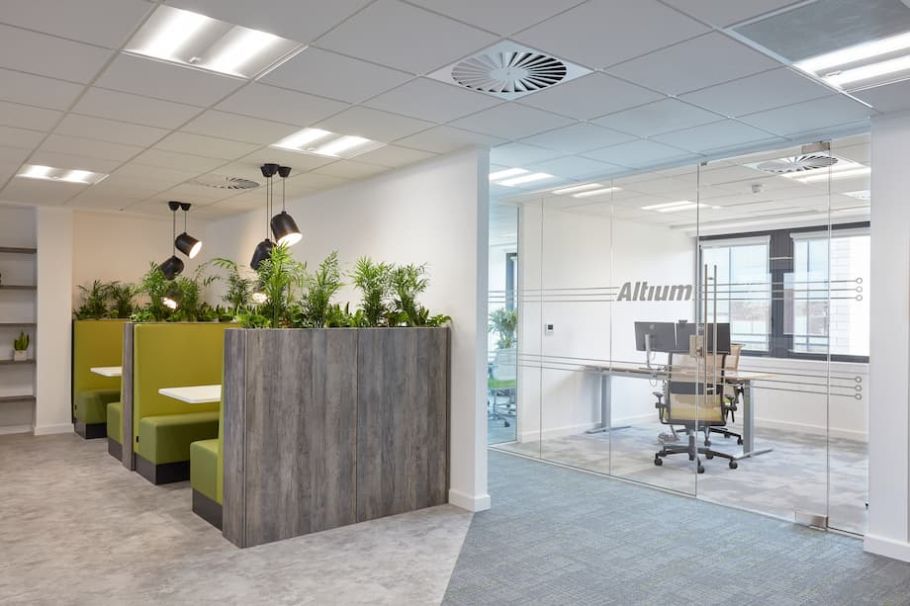
Creating adaptable work environments was central to COEL’s design for Altium.
The global software company wanted to bring its UK sales and research and development teams together under a single headquarters while supporting closer collaboration between departments with very different working styles.
The resulting workplace provides a variety of environments that encourage collaboration, focused work and informal interaction, allowing employees to choose spaces that best support the work they are undertaking.
Alongside flexibility, sustainability was a key consideration, with natural finishes and carefully selected materials reflecting Altium’s commitment to a greener future. The project demonstrates how thoughtful workplace planning can successfully balance collaboration, employee experience and long-term adaptability.
One of the biggest challenges facing organisations today is uncertainty.
Headcounts change.
Departments grow.
Technology evolves.
Business priorities shift.
A workplace designed purely around today’s requirements may struggle to support tomorrow’s needs.
For this reason, modern office planning increasingly focuses on creating adaptable environments that can evolve alongside the organisation.
Future-proofing does not mean trying to predict exactly how a business will operate in ten years.
Instead, it means designing workplaces that are flexible enough to accommodate change without requiring major refurbishment every few years.
Businesses rarely remain static.
New employees join.
Teams expand.
Departments merge.
Services diversify.
Flexible office layouts allow organisations to accommodate growth with minimal disruption.
Rather than relocating or undertaking extensive construction, furniture layouts, neighbourhoods, and pivot spaces can often be reconfigured to support changing requirements.
Hybrid working continues to influence workplace planning.
While attendance patterns vary between organisations, many businesses no longer require every employee to be present every day.
This creates opportunities to replace rows of permanently allocated desks with more varied work settings that better reflect how the office is actually used.
Providing employees with environments specifically designed for collaboration, mentoring, innovation and social interaction gives them reasons to spend time together that cannot be replicated at home.
Sustainability is increasingly influencing workplace design decisions.
While much attention focuses on materials and energy performance, the way office space is planned also plays an important role in reducing environmental impact.
Creating flexible workplaces that adapt over time helps extend the lifespan of office fit outs while reducing waste from frequent refurbishment projects.
For example, modular furniture can often be reconfigured rather than replaced.
Movable partitions allow layouts to evolve without major building work.
Multi-functional spaces reduce the need for duplicate rooms, enabling organisations to make better use of their existing footprint.
Planning flexibility into the workplace from the outset supports both commercial efficiency and long-term environmental performance.
This aligns closely with COEL’s approach to delivering adaptable, sustainable workplaces through considered design, responsible material selection and solutions that continue to perform as businesses evolve.
The workplace has become an important expression of an organisation’s culture.
Employees increasingly expect offices that support collaboration, wellbeing, learning, and professional development, while providing environments that cannot be replicated through remote work alone.
Successful office space planning creates workplaces where people genuinely want to spend time.
Whether that means collaborating with colleagues, mentoring new team members, hosting clients or simply enjoying a comfortable environment designed around their needs, the office becomes a destination that adds value to the working day rather than simply providing somewhere to sit.
By combining workplace neighbourhoods, microenvironments and pivot spaces within a carefully considered strategy, organisations can create flexible environments that support both current operations and future business growth.
Workplaces naturally evolve as organisations grow, adopt new technologies, and change how their teams operate. However, office layouts do not always keep pace with these changes.
If your workspace no longer supports how your business operates today, it may be time to review your office space planning strategy.
Some of the most common indicators include:
If employees regularly struggle to find space for meetings, video calls or collaborative workshops, it often suggests the balance of work settings no longer reflects the needs of the business.
Introducing additional microenvironments or creating flexible pivot spaces can relieve pressure without requiring a significant increase in floor space.
Hybrid working has changed occupancy patterns for many organisations.
If large areas of desking remain unused while collaborative spaces are in constant demand, reallocating floor space can significantly improve utilisation and employee experience.
Open-plan offices work well for collaboration but can become challenging when employees need to concentrate or hold confidential conversations.
Providing acoustic booths, focus rooms, or quieter neighbourhoods creates greater flexibility without sacrificing collaboration.
Informal discussions are an important part of workplace culture. Still, if teams regularly gather along circulation routes or in kitchen areas because there are no suitable collaboration spaces, it often signals that the office no longer supports the way people naturally work.
Your workplace should reinforce your culture, values and ambitions.
If the space feels dated, is disconnected from your brand, or no longer supports recruitment and retention, it may be time to consider a refurbishment that better reflects your organisation today and prepares for future growth.
Q: How much office space should you allow per employee?
There is no universal figure, as every organisation works differently. The amount of space required depends on occupancy levels, furniture layouts, meeting facilities and the balance between collaborative and focused work.
Rather than planning around desk numbers alone, modern workplace design considers how employees actually use the office throughout the working week.
Q: How do you plan office space for hybrid working?
Hybrid workplaces should be designed around employee activities rather than attendance numbers.
This often means providing fewer permanently allocated desks alongside a greater variety of meeting spaces, collaboration areas, quiet work settings and social environments that encourage employees to come together when they are in the office.
Understanding occupancy patterns and workplace utilisation is an essential first step.
Q: What is the difference between neighbourhoods and microenvironments?
Neighbourhoods are larger workplace zones that bring together a variety of work settings to support teams and departments.
Microenvironments are much smaller spaces created for specific activities, such as phone booths, quiet focus areas, informal collaboration pods or wellness spaces.
Both approaches work together to provide employees with greater choice throughout the day.
Q: Can office space planning improve employee wellbeing?
Yes.
Providing employees with a choice of environments helps reduce distractions, supports different working styles and creates opportunities to recharge throughout the day.
Factors such as natural light, acoustics, furniture, biophilic design and comfortable breakout spaces all contribute to creating healthier workplaces.
Q: How often should an office layout be reviewed?
Many organisations benefit from reviewing workplace performance every two to three years, or sooner following significant organisational change such as business growth, relocation or changes to hybrid working policies.
Regular workplace audits help ensure the office continues to meet operational requirements while identifying opportunities for improvement.
Q: Can existing office space be adapted without relocating?
In many cases, yes.
Introducing flexible furniture, creating microenvironments, reconfiguring neighbourhoods and making better use of underutilised areas can often transform the performance of an existing workplace without the cost and disruption of relocating.
Every successful workplace starts with understanding people.
At COEL, we believe office space planning should do far more than organise desks and meeting rooms. It should create an environment that supports how your people work, strengthens your company culture, and enables your business to adapt with confidence.
Our experienced workplace strategists, interior designers and project teams work closely with every client to understand their organisation, their people and their future ambitions before developing tailored workplace solutions.
Through workplace audits, occupancy analysis, and collaborative consultation, we identify how your existing space performs today and plan for how it will support your business tomorrow.
Whether you’re relocating, refurbishing or completely reimagining your workplace, our integrated service covers every stage of the journey.
From workplace strategy and interior design through to fit-out, furniture, and ongoing maintenance, our specialist teams manage the entire process, creating inspiring spaces that improve the employee experience while delivering practical, long-term value. This fully integrated approach enables organisations to benefit from a single partner who understands both the project’s strategic objectives and the practical details that bring exceptional workplaces to life.
As businesses continue to evolve, the most successful workplaces will be those designed with flexibility at their core.
By combining workplace neighbourhoods, microenvironments and pivot spaces within a carefully considered strategy, organisations can create offices that encourage collaboration, support wellbeing, improve productivity and remain adaptable for years to come.
Because great workplaces don’t just accommodate the way people work today – they inspire the way they’ll work tomorrow.
Prefer an AI Summary?