A healthy, happy workforce is more productive, more engaged, and more invested in company goals. Even before the COVID-19 pandemic, workplace wellbeing was moving from a ‘nice to have’ to an important consideration for businesses looking to attract, support and retain talented people.
The pandemic accelerated that change dramatically.
Periods of isolation, home working, furlough and uncertainty affected people in very different ways, placing physical, mental and emotional wellbeing firmly on the workplace agenda. As businesses began welcoming employees back into offices, it became increasingly apparent that the workplace itself had an important role to play.
Supporting workplace wellbeing isn’t simply about introducing individual initiatives. It means listening to employees, encouraging healthier working practices, and providing an environment that helps people feel comfortable, connected, and able to perform at their best.
Whilst the pandemic was a shared experience, everyone’s circumstances were different.
Some employees spent long periods on furlough, others juggled work with childcare or caring responsibilities, some experienced financial difficulties or bereavement, whilst others struggled with isolation or the physical effects of COVID-19.
That made consultation particularly important as people returned to the workplace, but the principle remains equally relevant today.
Businesses need to understand how their teams use and experience the workplace, rather than assuming what employees want. Regular conversations, employee surveys and stakeholder consultation can reveal where people feel supported and where changes may be required.
This could relate to work patterns, noise, privacy, accessibility, collaboration, social interaction, or simply having somewhere to step away from a busy work environment.
The same principle applies to the physical workplace. Effective office space planning considers how teams interact, the tasks they undertake and the different environments they need throughout the working day.
Lockdowns changed everyday routines considerably. For many people, commuting disappeared, daily movement decreased, and the line between work and home blurred.
The workplace can help encourage healthier habits without dictating how employees should live.
Cycle-to-work facilities, secure bicycle storage, showers and changing areas can make active commuting more practical. Appealing stairways can encourage movement between floors, whilst access to outdoor spaces gives employees somewhere to take a genuine break from their desks.
Food and refreshment areas also play a role. Accessible drinking water, kitchen facilities and comfortable places to sit away from a workstation encourage people to take proper breaks rather than eating lunch in front of a screen.
Thoughtful workplace design makes healthier choices easier to incorporate into the working day.
One of the less visible consequences of the pandemic was its impact on mental and emotional wellbeing.
Periods of isolation, uncertainty, and disrupted routines affected people differently, highlighting the importance of creating workplaces where employees feel supported and can speak openly when they need help.
Mental health support can take many forms, from employee assistance programmes and trained mental health first aiders to flexible working arrangements and supportive management.
The physical workplace can complement these initiatives.
Not everyone thrives in the same environment. Noise, bright lighting, constant movement and a lack of privacy can make an office stressful for some employees, whilst others benefit from social interaction and energetic surroundings.
A neuro-inclusive workplace design considers how factors including sound, light, movement and visual stimulation can affect people’s experience of the office, helping create an environment that accommodates a broader range of needs and working preferences.
The physical workplace can significantly influence how people feel throughout the workday.
A well-designed office should support physical comfort, concentration, collaboration and social interaction whilst giving employees enough choice to move between different environments.
Good office interior design therefore goes far beyond aesthetics. Space planning, acoustics, furniture, lighting, technology, materials and access to natural elements all contribute to the overall employee experience.
Different people, teams and tasks require different environments.
A sales team making frequent calls may thrive in a lively, collaborative area, while someone working on detailed financial information may need much more privacy and concentration.
A single open-plan environment can struggle to accommodate both.
Instead, workplaces can combine open-plan desking, quiet areas, meeting rooms, collaboration zones, booths, breakout spaces, and social settings.
This gives employees more choice throughout the day and lets the workplace support different activities, rather than expecting every task to happen at the same desk.
Incorporating neighbourhoods, microenvironments and pivot spaces can take this further, providing dedicated settings for collaboration, privacy, creativity and downtime whilst allowing the workplace to adapt as requirements change.
Natural light is one of the most valuable resources available within a workplace.
Rather than treating windows as a mere architectural feature, office layouts can be planned to make better use of available daylight and external views.
Positioning work areas thoughtfully, avoiding unnecessary obstructions around windows and considering how partitions affect light penetration can help distribute natural light further into the workspace.
Lighting design should then complement the available daylight, providing appropriate illumination for different tasks without creating unnecessary glare or visual discomfort.
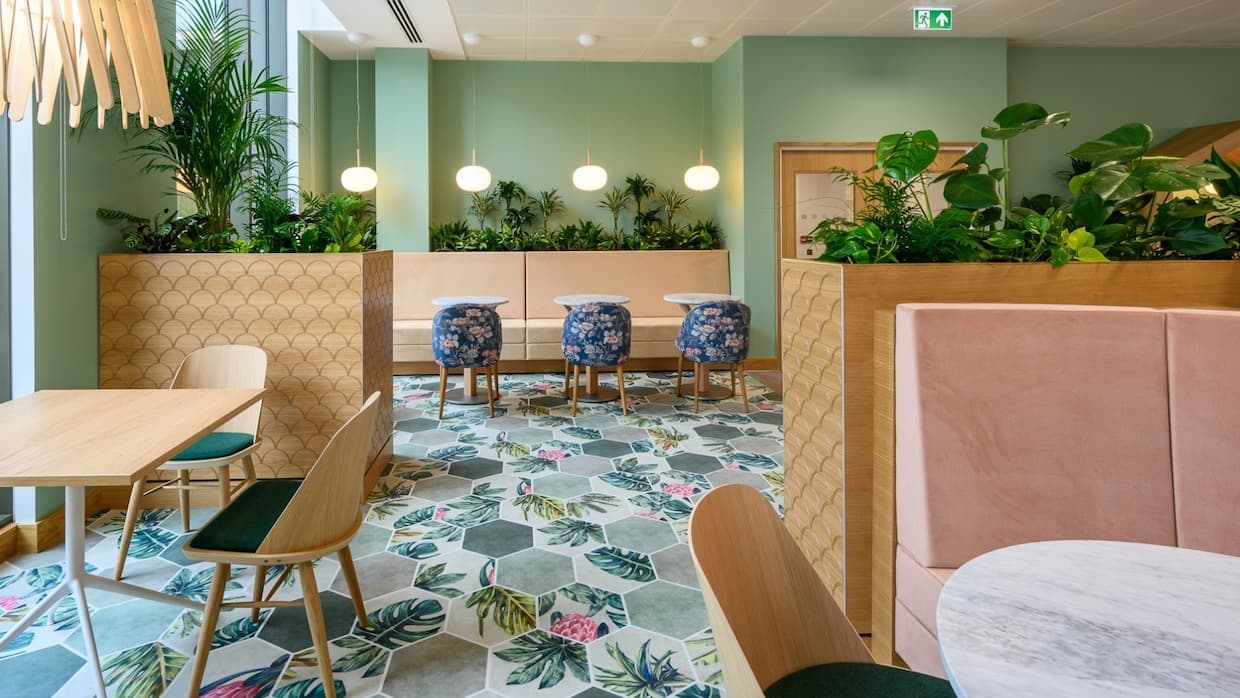
Plants and other natural elements can transform a workplace’s atmosphere, creating environments that feel softer, calmer, and more welcoming.
Incorporating biophilia into office design can strengthen the connection between people and nature whilst supporting physical and psychological wellbeing.
Planting is only one element. Natural materials and textures, access to daylight, views of greenery and connections to outdoor areas can all contribute towards the experience.
These features can be incorporated throughout the workplace rather than being treated as decorative additions, helping create spaces that feel healthier and more inviting.
Taking a break doesn’t necessarily mean leaving the office.
Comfortable breakout areas, kitchens, cafés and informal seating spaces give employees somewhere to move away from their desks, recharge and interact with colleagues in a less formal setting.
These spaces can also encourage the spontaneous conversations that are difficult to recreate remotely and help strengthen relationships between colleagues and teams.
Rather than simply installing a coffee machine in an unused corner, consider the experience surrounding it. Comfortable furniture, considered lighting, planting and good acoustics can transform a refreshment area into a genuine social hub.
The result is a workplace that provides opportunities for both downtime and connection.
Perhaps one of the most important lessons from the post-pandemic workplace is that people don’t all work the same way.
Some employees enjoy the energy of a busy office. Others need periods of quiet concentration. Some prefer face-to-face collaboration, whilst others may need privacy for calls or focused work.
A workplace designed around wellbeing therefore shouldn’t prescribe one way of working. It should provide choice.
Giving people access to different environments throughout the day enables them to find the setting that best supports the task they’re undertaking and how they feel at that particular moment.
Flexibility also creates a workplace that can respond as teams, working practices, and business requirements continue to change. Adaptable furniture, multifunctional areas and a considered balance between individual and shared spaces can help an office remain relevant as an organisation evolves.
The workplace also has an important social role.
Hybrid working has given employees greater flexibility, but it has reinforced the value of the office as a place where people can build relationships, exchange ideas, and feel connected to the wider organisation.
This doesn’t mean filling the office with collaboration spaces at the expense of everything else. It means creating the right combination of environments for formal meetings, spontaneous conversations, social interaction and individual work.
The workplace can also reinforce company identity through materials, graphics, furniture, and how spaces are used. When employees feel their surroundings reflect the organisation’s culture and values, the office becomes more than a place to work.
Workplace wellbeing has evolved considerably since businesses first began considering how to welcome employees back after the pandemic. What hasn’t changed is the importance of putting people at the centre of workplace decisions.
COEL designs inspiring workplaces around the human needs of the businesses we work with. By listening to employees and stakeholders and understanding your culture, working practices and future objectives, we can create an environment that supports productivity, creativity, collaboration and wellbeing.
Whether you’re refreshing an existing workplace, relocating your team or planning a complete office design and fit out, our integrated team can plan, design, build, furnish and maintain your workspace, providing continuity throughout the project and beyond.
A healthier workplace isn’t created by following the latest office trend; it’s created by understanding your people and giving them an environment where they feel comfortable, connected, and inspired to do their best work.
Prefer an AI Summary?