Industry Insight

Commercial Furniture Consultancy Process - COEL

17 February 2026

How Investment Across the Cambridge–Oxford Growth Corridor is Reshaping Commercial Fit Outs

The Cambridge–Oxford Growth Corridor is entering one of its most transformative periods in decades. With significant public and private investment committed to transport, housing, innovation and scientific infrastructure, the region is consolidating its status as a globally recognised supercluster of research, technology and advanced industries. These changes are shaping how commercial buildings are designed, refurbished and fitted out, which in turn is driving science-ready infrastructure, rapid occupation, flexible design and sustainability at scale.

A Region Defined by Major Investment

Recent government announcements have confirmed over £500 million of central investment for the Oxford–Cambridge Growth Corridor, including up to £400 million to accelerate development in Greater Cambridge (focused on affordable homes, enabling infrastructure and new business space), alongside continued support for East West Rail.
In parallel notable projects in the region include:

  • East West Rail: A further £2.5 billion was allocated at the 2025 Spending Review to progress the next stages of EWR, with updated proposals including new stations (e.g., Cambourne, Cambridge East subject to third-party funding), capacity upgrades and partial/discontinuous electrification for hybrid battery-electric trains.
  • Oxford North innovation district: Phase 1 is open, with a masterplan to deliver ~1 million sq ft of labs and workspace plus 480 homes, public parks and amenities, and multiple Phase 2 lab buildings approved.
  • The Oxford Science Park –Daubeny Project: ~450,000 sq ft of lab-ready space targeting completion in 2026, with up to 70% wet/dry lab capacity per floor and sustainability credentials (EPC A, BREEAM Excellent target).
  • Ellison Institute of Technology: Announced a £10 billion expansion plan over the next decade to scale its Oxford base, creating thousands of jobs and anchoring a global research hub adjoining The Oxford Science Park.

What This Means for Commercial
Buildings and Fit-Outs
 

01. A shift to science-ready and hybrid space:  

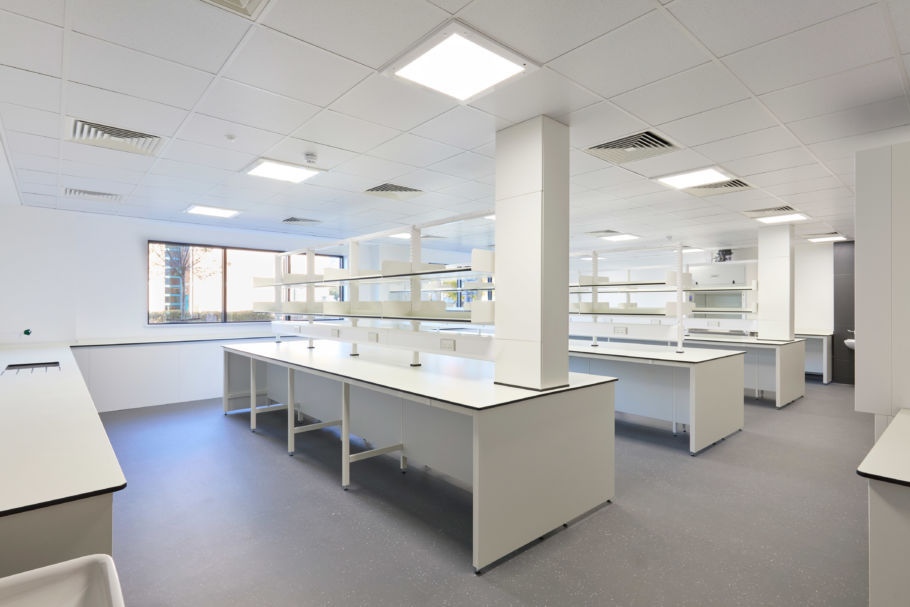
The corridor’s growth- life sciences, deep tech, AI, advanced manufacturing and cleantech—requires specialist environments. Occupiers increasingly expect lab-enabled office floors, enhanced ventilation/extract, robust MEP, integrated write-up/collaboration areas and flexibility to scale.
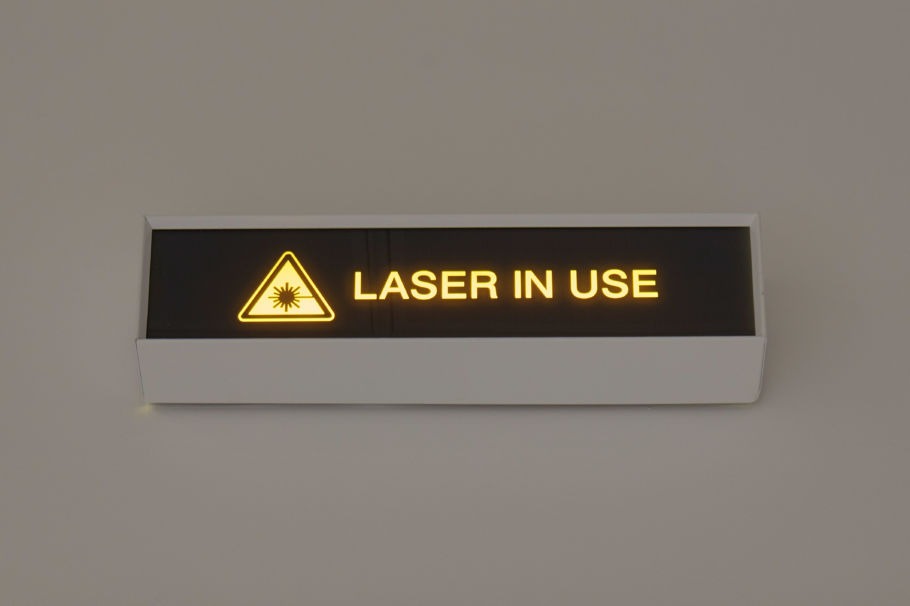
Illuminated sign displaying the text "LASER IN USE" with a laser warning symbol, set against a neutral wall background.

02. Speed to occupation and a flight to quality:  

Following the wave of completions in 2024–2025, 2026 is characterised by a market rebalancing. Vacancy has risen (especially in London) and leasing activity sits below long-term averages; occupiers are prioritising best-in-class, well-located space and turnkey delivery (Cat A+ and fitted labs).

03. Connectivity shaping location strategy:  

EWR’s next phases and station proposals influence where organisations locate, consolidate or expand, opening new labour markets and enabling multi-hub strategies across Oxford, Milton Keynes, Bedford and Cambridge.

A female designer sitting at a boardroom table talking to a colleague with a screen to her right to show a briefing presentation

04. Sustainability and retrofit at scale:  

Planning and ESG expectations continue to favour brown-to-green transformations. Energy-intensive lab uses demand smart design (electrification, heat recovery, PVs) and careful planning to address extraction, waste and amenity impacts; high-quality retrofits are viable and increasingly favoured over new build where appropriate.
Market Dynamics:
2026 Snapshot 

  • Supply–demand rebalancing: After acute shortages in 2023–2024, a surge of completions through 2024–2025 means vacancy has risen (notably in London), and leasing activity is below long-term averages. The pipeline is moderating, reducing the risk of oversupply.
  • Development pipeline: Around 3.6 million sq ft remained under construction across the Golden Triangle at end-Q4 2025, with a moderating pipeline into 2026.
  • Rents: Prime headline quoting rents held broadly steady into Q4 2025/Q1 2026 (indicative ranges: London ~£140 psf; Cambridge ~£77 psf; Oxford ~£70 psf), with a growing premium for fully-fitted, best-in-class labs.
  • Funding backdrop: VC funding moderated from 2021–2022 highs but remains resilient by historical standards; convergence with AI, quantum and advanced engineering is shaping demand for hybrid R&D space.

Impacts on
Tenant Expectations
 

As the Oxford–Cambridge Growth Corridor matures into a globally competitive innovation ecosystem, tenant expectations have evolved just as quickly as the science and technology sectors driving demand. 

In 2026’s rebalanced market, where choice has increased but competition for best-in-class space remains intense, occupiers are prioritising environments that enhance productivity, accelerate mobilisation, and support long-term operational resilience. This means commercial buildings must now deliver far more than square footage: they must provide adaptable infrastructure, human-centred design and sustainability led performance that aligns with modern research, recruitment and investment pressures.

We are seeing demand centred around;
  • High-spec collaboration zones and write-up areas integrated with technical space
  • Enhanced building services (fresh air rates, extract, resilience and redundancy) for lab adaptability
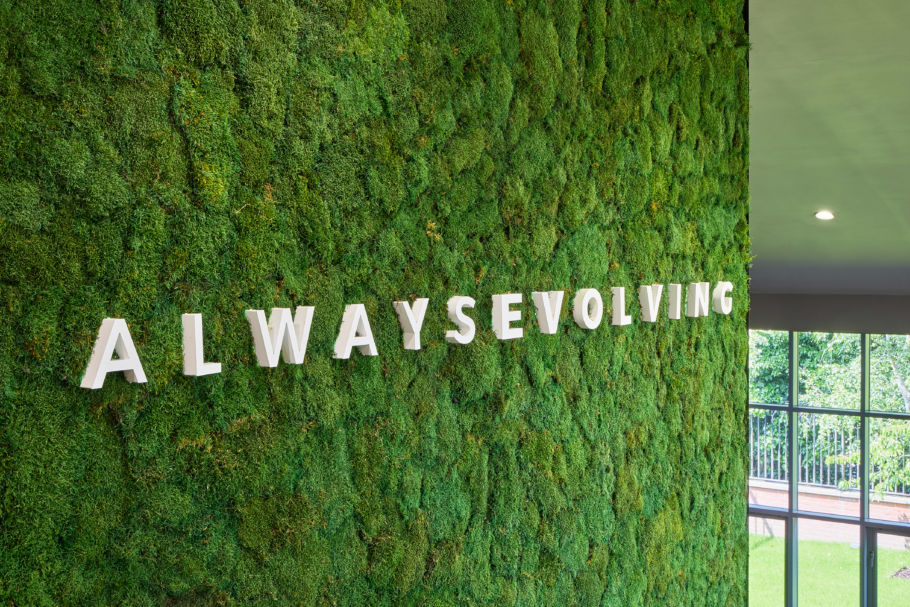
  • Wellness-led interiors and biophilic design to support retention and productivity
  • Flexible CAT A+ and fitted-lab solutions for faster mobilisation
  • ESG-aligned materials and building performance (all-electric systems, PVs, heat recovery, circularity)
  • Space-optimised layouts to justify rents in high-demand clusters
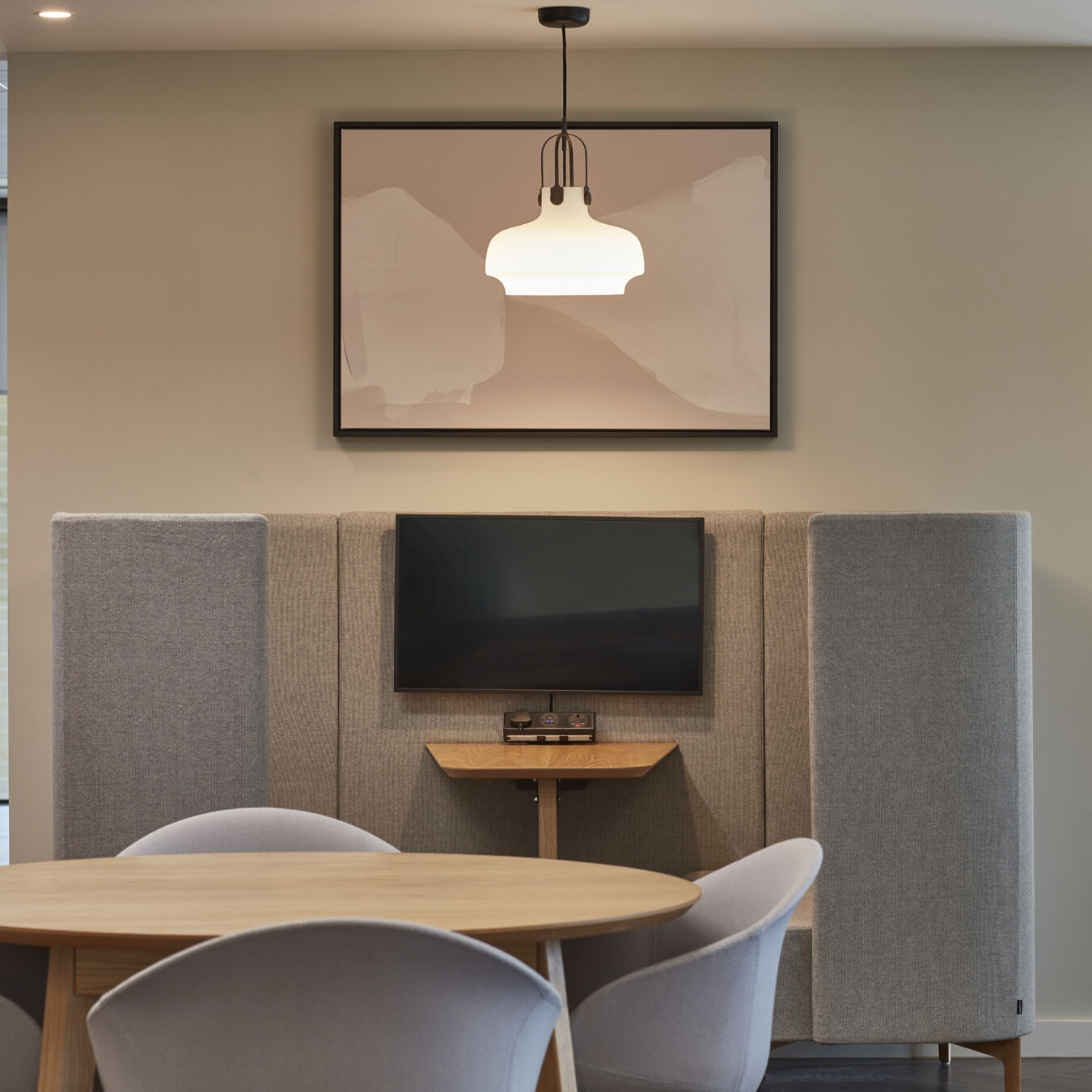
Modern meeting space with a round table and four chairs, a small wall-mounted TV between acoustic panels, and a pendant light hanging above. A framed abstract artwork is displayed on the wall.

How COEL Is Supporting
the Growth Corridor

COEL partners with landlords, developers, institutions and private companies across the corridor to plan and deliver spaces that meet this investment-driven landscape: science-ready, fast to deliver, flexible in use and low carbon by design.

  1. Transforming commercial buildings into lab-enabled, hybrid spaces for science and technology tenants. See our projects at 316 Cambridge Science Park and Terrington House.
  2. Designing and delivering advanced healthcare, education and training environments, including a state-of-the-art training facility for the NHS at the Quorum and specialist spaces for the Hamilton Kerr Institute.
  3. Executing CAT A / CAT A+ refurbishments across science parks and innovation districts, including our project at 8200 Cambridge Research Park, for JLL.
  4. Developing turnkey, fitted solutions that reduce time-to-operation, including fully managed office solutions for Mishcon de Reya and Crafted.
  5. Providing professional audits to ensure commercial spaces are meeting tenant expectations, including EPC and Building Safety Act requirements, and managing any resulting works.

When asked why COEL would be the right partner for a design and fit out project in the region, Managing Director, Richard Brent, responded: 

“At COEL, we design and build offices and laboratories across the Oxford–Cambridge Arc, delivering Cat A, Cat A+ and Cat B projects with inhouse design, MEP and furniture teams. With over 30 years’ experience and a full turnkey solution in-house, this enables faster, lower risk mobilisation for science and tech clients.” 

Looking Ahead 

Investment across the Oxford–Cambridge Growth Corridor signals long-term confidence in the UK’s innovation economy. As transport improves, large-scale projects complete and global capital flows into research and technology, demand for cutting-edge fit outs will intensify; but in 2026 this is coupled with a market rebalancing.

Owners who evolve now, prioritising adaptability, sustainability and science-ready design, will be best placed to capture the next wave of growth.

Speak to us now about how we can help ensure your space is tenant and future-reading for 2026 and beyond.

Contact us

what are you looking for?

Jo we will add content here.