The pandemic created one of the most significant periods of change the workplace had experienced for generations. Established working patterns were disrupted almost overnight, and businesses were forced to reconsider not only where people worked, but what they needed from the office when they were there.
It was against this backdrop that COEL CEO Alistair Rumbelow spoke to the Cambridge Independent ahead of the 2022 SME Cambridgeshire Business Awards, where COEL had been shortlisted for Business of the Year in the More Than 50 Employees category.
At the time, Alistair highlighted how forward-thinking organisations had used periods of lower office occupancy to reconsider their working environments.
“Clever organisations took the time when employees were not frequenting the office as much, to make some astute and spectacular changes to the look and feel of their working environment.”
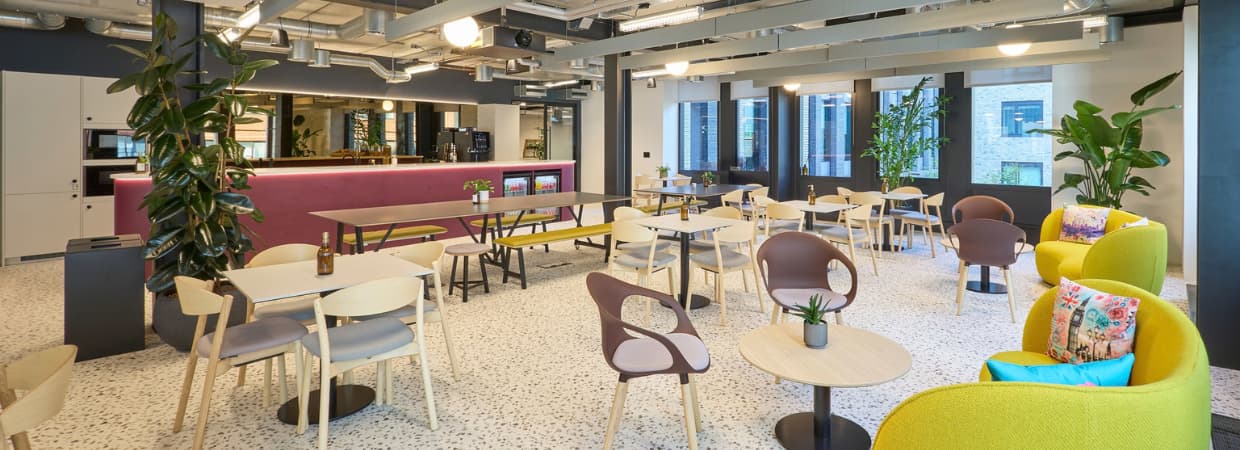
Professional sectors may have varied, but COEL was already seeing consistent themes emerge from workplace projects. Versatility, colour, comfort, and a greater sense of luxury were becoming increasingly important as businesses looked beyond the functional office to workplaces that could create a richer employee experience.
Alistair described this as creating environments capable of “lifting your senses and elevating your mood”.
Several years later, many of those principles continue to influence workplace design.
One lasting consequence of the pandemic was a reassessment of what the physical workplace was actually for.
If certain individual tasks could be completed successfully elsewhere, the office needed to provide something different.
Collaboration, social interaction, mentoring, creativity, team building and company culture became increasingly important considerations. Rather than simply providing enough desks for the workforce, organisations began looking more closely at the different activities their people carried out throughout the working day.
That encouraged greater variety within workplace design.
Open collaboration areas could sit alongside private rooms and acoustic booths. Traditional meeting rooms were complemented by informal spaces where conversations could happen naturally. Social areas became important destinations within the office rather than secondary facilities hidden away from the main workspace.
The result was greater choice.
Employees could move between environments based on the activity they were doing, rather than staying at the same workstation all day.
COEL’s work with Jazz Pharmaceuticals demonstrated how different working environments could be incorporated within the same workplace.
Fixed desks were combined with open-plan areas and acoustic booths, giving employees access to quieter environments when privacy or concentration was required.
The design also recognised the importance of less formal interaction.
Plants and three plush velvet sofas transformed the courtyard into a comfortable setting for informal conversations and time away from traditional desk-based working.
Rather than prescribing one way of using the office, the workplace provided employees with different environments throughout the day.
The quality of the physical environment also became increasingly important.
At I-MEX (M&E) Ltd, bringing natural light into the company’s new purpose-built workplace was an important part of the design.
A structural glazed floor created a visual connection between levels while allowing daylight to reach the foyer below. Rooms cantilevered from a mezzanine floor provided private working areas and smaller meeting spaces alongside the larger open-plan office.
The project showed how architectural interventions can shape the workplace experience, creating visual interest while meeting practical needs for privacy, meetings, and focused work.
Workplace design also provides businesses with an opportunity to express their identity.
When BioMed Realty moved into new office and marketing suite space at Granta Park, its brand became an integral part of the interior.
The company’s logo and deep blue corporate colour were incorporated throughout the environment, creating a workplace that was immediately recognisable as BioMed Realty.
The building’s surroundings also played an important role.
Windows wrapping around the space retained views towards the lake and maximised natural light, while glazed screening partitions allowed that light to penetrate further into corridors and internal areas.
Social and collaborative settings added further variety, including a sophisticated kitchen, corner sofa, bar seating and long tables complemented by acoustic lighting.
The BioMed Realty project demonstrated that brand, wellbeing, acoustics, natural light and functionality do not need to be treated as separate considerations. Together, they shape the overall workplace experience.
The immediate post-pandemic conversation often centred on encouraging people to return to the office.
The more enduring question has proved to be different: what makes a workplace genuinely valuable to the people using it?
Comfort plays a role, but employee experience encompasses much more.
People need environments for concentration and collaboration. Some prefer lively, sociable surroundings, while others perform better with greater acoustic and visual privacy. Employees may need places for confidential conversations, virtual meetings, informal discussions, focused work or simply a change of environment.
Good workplace design recognises these differences.
Instead of designing around a single hypothetical employee, businesses can provide a range of settings that give people greater control over where and how they work.
Hybrid working accelerated the need for flexibility, but flexibility is not limited to working from home.
It can also exist within the office.
Furniture can be reconfigured. Collaboration areas can accommodate different group sizes. Meeting spaces can support both physical and virtual participants. Quiet areas can provide an alternative to open-plan working.
This adaptability helps organisations respond as team structures, working patterns and business requirements change.
At the same time, the workplace retains something difficult to reproduce remotely: physical connection.
Informal conversations, spontaneous ideas, mentoring and social interaction all contribute towards relationships between colleagues and a stronger sense of belonging within an organisation.
COEL wanted to look beyond assumptions about the future of work and gain a better picture of what people were actually experiencing.
Throughout 2021, COEL worked with business psychologist Kelly Drewery of Talent Glue on research examining how the pandemic had affected people’s relationship with work and the workplace.
More than 1,000 participants from over 300 businesses contributed to the research, which considered the social, psychological and physical requirements experienced by individuals and organisations during this extraordinary period of workplace change.
One of its most important implications was that no universal solution existed.
Different people valued different aspects of workplace and remote working, reinforcing the importance of offering choice and considering employees’ needs rather than adopting a single model across an organisation.
That principle remains highly relevant to workplace design.
The post-pandemic period accelerated changes already influencing office design. Greater flexibility, improved employee experience, more varied work settings, and increased attention to wellbeing have helped redefine workplace expectations.
The challenge for businesses is no longer to provide somewhere for people to work.
It is to create an environment with a clear purpose.
As specialists in commercial interior design and build, COEL works with organisations to understand their people, working practices and future ambitions before translating those requirements into an effective workplace strategy.
From workplace planning and interior design through to office fit out and refurbishment, our integrated team creates adaptable, inspiring environments where people can concentrate, collaborate, connect and do their best work.