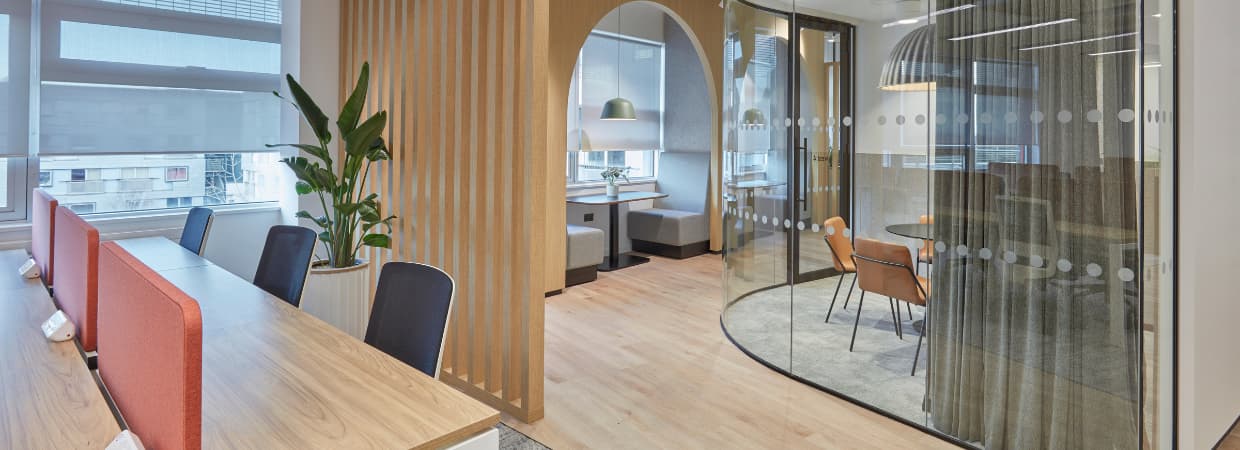
The role of the office has changed.
Advances in technology, the rise of hybrid working and shifting employee expectations have redefined how workplaces are used. The office is no longer a default location for every task, but it remains essential as a place where people come together.
The future of office design is not about replacing the workplace. It is about reshaping it to support collaboration, connection and performance.
With greater flexibility in where work takes place, the office must now offer something that cannot be replicated at home.
It has become a destination that supports:
Organisations are moving away from desk-based environments towards spaces that encourage interaction and engagement.
Collaboration sits at the heart of the modern workplace.
While digital tools enable communication, they cannot fully replace the value of in-person interaction. The ability to read body language, share ideas naturally and build relationships remains a key part of working life.
As a result, workplaces are placing greater emphasis on:
These spaces allow ideas to develop more organically and support stronger team dynamics.
While collaboration is essential, so too is the ability to concentrate.
Many employees have experienced improved focus when working away from busy office environments. The challenge for workplace design is to bring that level of focus back into the office.
Acoustic booths and meeting pods have become an important part of this balance. They provide: Their flexibility makes them particularly valuable. They can be installed quickly, moved as needed and integrated into existing layouts without major structural changes. By combining open collaboration spaces with quiet, enclosed areas, offices can support a wider range of working styles. Technology is central to the future workplace. As teams work across different locations, offices must support seamless communication between in-office and remote employees. This includes: The office becomes a hub that enables productivity, rather than a constraint. Employee wellbeing is now a key consideration in office design. A thoughtfully planned workplace supports both physical and psychological wellbeing through: Creating an environment where people feel comfortable and supported helps improve both engagement and performance. Workplaces are increasingly taking cues from hospitality and residential environments. This shift reflects a desire to create spaces that feel welcoming, comfortable and human. Design elements may include: These environments help foster a sense of belonging and make the office a place people want to spend time. The office also plays a key role in expressing a company’s identity. With fewer people in the office full time, the physical workspace becomes an important touchpoint for both employees and visitors. Design can be used to: A strong identity helps connect people to the organisation and its purpose. As working patterns continue to evolve, organisations are focusing on creating workplaces that people actively want to use. This means offering: Rather than mandating attendance, the office becomes a place that adds value to the working day. We see the workplace as a powerful tool for bringing people together. Our commercial interior designers at COEL work closely with clients to understand how their teams operate and what they need from their environment. By combining planning, design, build and furniture, we create workplaces that support collaboration, focus and flexibility. From integrating acoustic booths and meeting pods to designing spaces that reflect company culture, our approach ensures the workplace is aligned with both business objectives and employee experience. The future of office design will continue to evolve, but one principle remains constant. People need connection. While technology enables flexibility, the workplace provides the environment where relationships are built, ideas are shared, and culture is created. By designing offices that support both collaboration and focus, organisations can create spaces that not only meet today’s needs but are ready for what comes next. Prefer an AI Summary?
Technology That Enables Seamless Working
Designing For Wellbeing
A Shift Towards Hospitality Inspired Design
Strengthening Brand And Identity
Encouraging People Back To The Office
The Future Of Workplace Design With COEL
Looking Ahead
Related Articles