An inspiring workplace should do more than look impressive. The best workspace design creates an environment that supports the people using it, reflects the organisation behind it and makes everyday working life easier, healthier and more enjoyable.
This has become increasingly important as office expectations have changed. Hybrid working means employees no longer necessarily need to be in the same place every day, so workplaces must provide compelling reasons for people to come together. Collaboration, social connection, company culture, focused work, learning and employee wellbeing all need to be considered alongside practical requirements.
Effective office interior design brings these priorities together. Rather than treating layout, furniture, colour, lighting and technology as separate decisions, each element contributes to a wider workplace experience that supports the organisation’s people and long-term ambitions.
An inspiring workplace is therefore not defined by a particular design style. It feels distinctly right for the business and the people who use it.
Successful workplace design begins with understanding how an organisation operates.
Who uses the workplace? How do different teams interact? Which activities happen most frequently? Where do employees need privacy or concentration? How is the organisation likely to change over the coming years?
These questions influence everything from the overall floor plan to furniture selection.
The most effective workplaces balance three interconnected considerations: the physical layout, the aesthetic environment and the practical functionality of the space.
The physical layout provides the framework for everything that happens within the workplace. Poor planning can create noise, congestion and underused areas, while a carefully considered layout can make movement intuitive and give employees access to appropriate environments throughout their working day.
Consider employee comfort from the start of the design process rather than after the office is complete.
Ergonomic chairs, correctly configured workstations and height-adjustable desks can help employees work comfortably, but ergonomics extends beyond the individual desk. Screen positioning, movement between different environments and the furniture provided within meeting and collaboration spaces all contribute to physical comfort.
The choice of office furniture should therefore reflect the activities taking place within each part of the workplace as well as its visual design.
The objective of good workspace design isn’t to fit as many people as possible into the available floor area. It is to make every part of the workplace useful.
Hybrid working has made this particularly important. An office may have plenty of desks but too few meeting rooms, acoustic booths, or collaboration spaces. Elsewhere, large boardrooms may remain empty for much of the week while employees struggle to find somewhere for a two-person conversation.
Understanding occupancy and working patterns helps designers strike the right balance.
COEL’s approach to office space planning considers collaboration, focus, meeting, social, and support areas together, creating workplaces that respond to how people actually work rather than simply allocating floor space by headcount.
Light strongly influences how a workplace feels.
Maximise natural daylight wherever possible, particularly in areas employees occupy for extended periods. The layout can help achieve this by avoiding unnecessary barriers around windows and considering how light travels through the floor plate.
Artificial lighting should then complement natural light and the activities taking place within different environments.
A collaborative social area may benefit from warmer, more atmospheric lighting, while task-oriented environments require appropriate illumination for comfortable working. Meeting rooms, laboratories and specialist spaces may have completely different requirements.
The aim is to create a considered lighting scheme that supports each environment’s function and character.
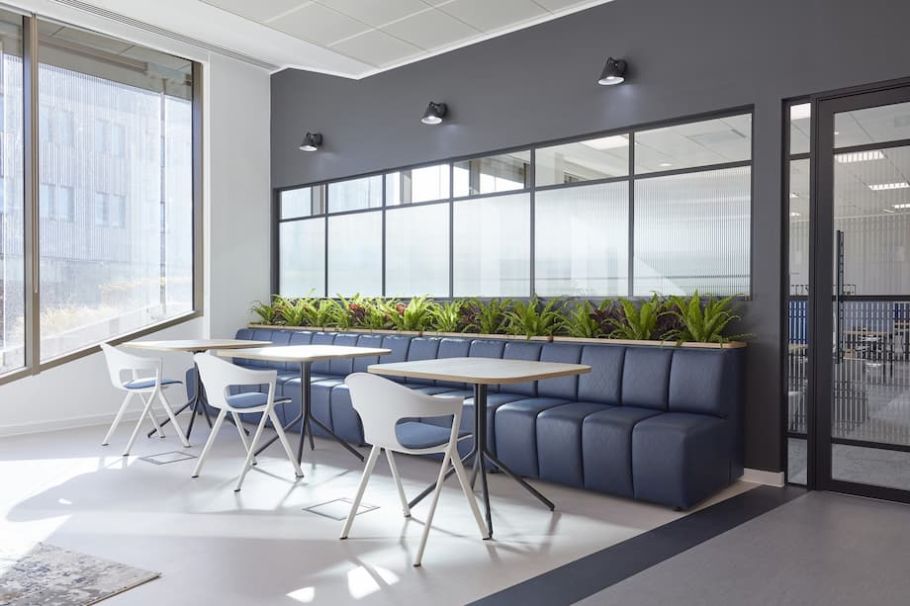
A workplace’s appearance shapes people’s first impressions, but aesthetics also influence how employees experience the environment every day.
Colour, materials, texture, furniture and artwork can reinforce identity, create atmosphere and help distinguish between different workplace settings.
The strongest designs avoid following trends simply because they are fashionable. Instead, aesthetic choices are grounded in the organisation’s identity and the experience it wants to create.
Colour can help establish character, define different areas and reinforce brand identity.
Rather than applying corporate colours indiscriminately across walls and furniture, a more considered approach can incorporate brand influences through upholstery, joinery, graphics and carefully selected accent colours.
Different environments can also have different visual characters. Social spaces might feel warmer and more energetic, while focus areas can use calmer palettes with fewer visual distractions.
This creates variation across the workplace without losing overall cohesion.
Materials strongly influence the character of an interior.
Timber and other natural finishes can introduce warmth, while glass helps maintain sightlines and distribute natural light. Textiles can soften spaces while contributing to acoustic performance, and carefully chosen architectural finishes can create distinctive focal points.
Material choices should also consider durability, maintenance and environmental impact.
A finish that looks impressive on completion but cannot withstand the demands of a busy commercial environment is unlikely to represent good long-term value.
Artwork and graphics can turn an otherwise generic office into somewhere recognisably connected to the organisation.
This might involve commissioned artwork, graphics inspired by the company’s work, displays celebrating achievements or subtle references to its history and values.
The objective isn’t to fill every available wall. Carefully chosen interventions can tell a much stronger story than excessive branding.
A workplace can become a physical expression of the organisation, helping employees feel connected to its purpose while creating a memorable experience for clients, recruits and visitors.
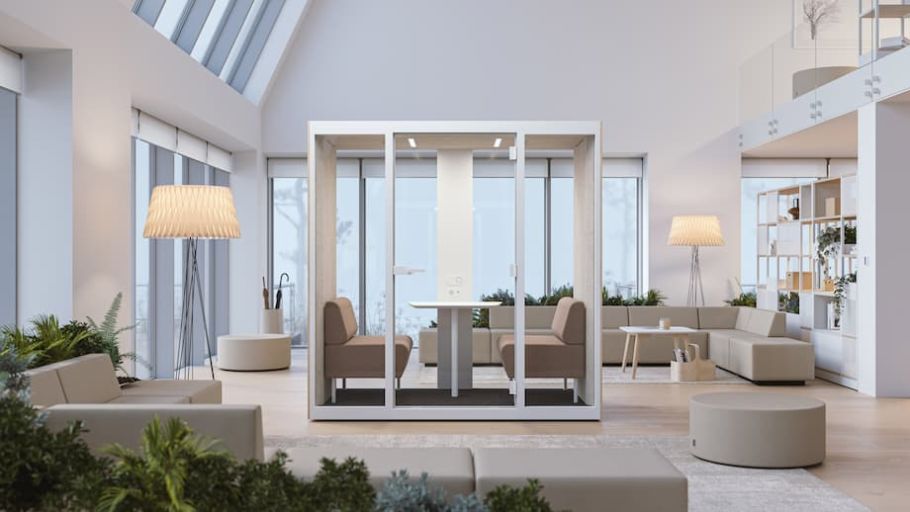
Beautiful workplaces still need to work.
A successful design must support everyday activities without employees continually having to work around the building. Storage, furniture, technology and flexibility are therefore fundamental components of the workplace experience.
Storage requirements have changed considerably as businesses have digitised processes and adopted hybrid working.
Traditional filing may have reduced, but demand for personal lockers, equipment storage and project materials may have increased.
Storage should be based on what the organisation genuinely needs rather than automatically replicating what existed in the previous workplace.
Designed integrated storage can also help define areas, provide visual screening and keep everyday clutter away from desks and circulation routes.
Businesses change, and workplaces need to change with them.
Teams grow and contract, departments reorganise, and working practices evolve. Designing flexibility into the office from the outset can make these transitions easier and reduce the need for disruptive alterations.
Modular furniture, movable partitions and multi-purpose environments can all help.
Technology should feel like a natural part of the workplace, not an add-on.
Video conferencing, room-booking systems, wireless presentation tools and easily accessible power can support hybrid collaboration and allow employees to move between different environments without losing productivity.
Therefore, consider technology requirements early in the design process.
This allows power, data, screens, acoustics and furniture to work together rather than requiring compromises once the fit-out is underway.
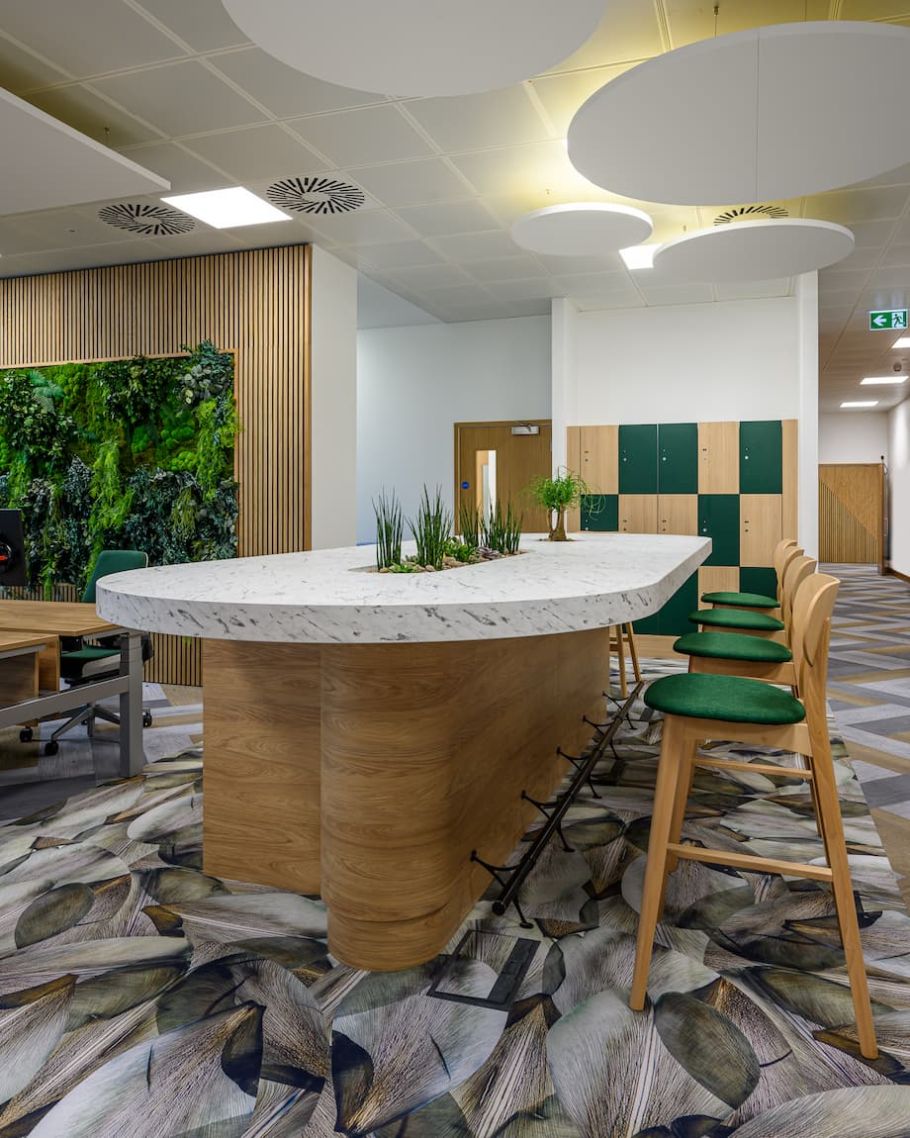
Once the physical, aesthetic, and functional requirements are established, they need to come together as one coherent workplace experience.
The following principles help create environments that are not only attractive but also engaging, inclusive and practical.
Biophilic design has become an important component of contemporary workplaces, but it involves more than adding plants to desks.
You can introduce connections to nature through natural daylight, views outside, planting, organic forms, textures, and materials.
Planting can also serve practical purposes within the layout, helping define areas, soften boundaries and create visual separation between work settings.
The result can be an environment that feels warmer, calmer and more human, particularly when natural elements are incorporated into the overall design rather than treated as decoration.
One of the most important functions of today’s office is bringing people together.
Collaboration doesn’t only happen in formal meeting rooms. Ideas are exchanged over coffee, during quick conversations between teams and through informal discussions that would be difficult to replicate remotely.
Workspace design can create opportunities for these interactions.
Shared project tables, breakout areas, social spaces, collaboration booths and appropriately positioned tea points can all encourage people to connect.
The aim is not to make every part of the office collaborative. It is to provide the right environments for interaction while protecting spaces that require concentration.
This balance is increasingly central to the future of office design, where the workplace acts as a destination for connection, learning, collaboration and company culture.
Employees don’t experience workplaces in the same way.
Some people work effectively in lively environments, while others need greater acoustic and visual separation to concentrate. The same employee may require completely different surroundings depending on the task they are completing.
Providing workplace choice is therefore increasingly important.
Quiet zones, enclosed booths, lower-stimulation areas and appropriately designed focus spaces can sit alongside collaborative environments.
This is particularly relevant when considering neuro-inclusive workplace design. Sound, lighting, movement, visual stimulation and social intensity can affect people differently, so designing genuine choice into the workplace can make it more comfortable and accessible for a wider range of employees.
Your workplace communicates something about your organisation from the moment somebody walks through the door.
For employees, it can reinforce culture and belonging. For clients, it communicates professionalism and personality. For prospective employees, it offers a tangible impression of what working for the organisation might feel like.
Successful workplace design translates company identity into the physical environment without simply covering the office in logos.
Brand colours may influence material choices. Company values might inspire particular types of collaborative or social spaces. The organisation’s heritage, products, people or location might inform graphics and design details.
The result should feel authentic, not applied.
A visually striking office that doesn’t support everyday working will quickly become frustrating.
Equally, a highly functional workplace that does not consider atmosphere or identity may struggle to inspire employees or represent the organisation effectively.
The strongest designs achieve both.
This means considering ergonomics alongside furniture aesthetics, acoustic performance alongside open sightlines and brand expression alongside long-term durability.
Contemporary office interior design principles increasingly focus on this relationship between form, function, adaptability and employee experience.
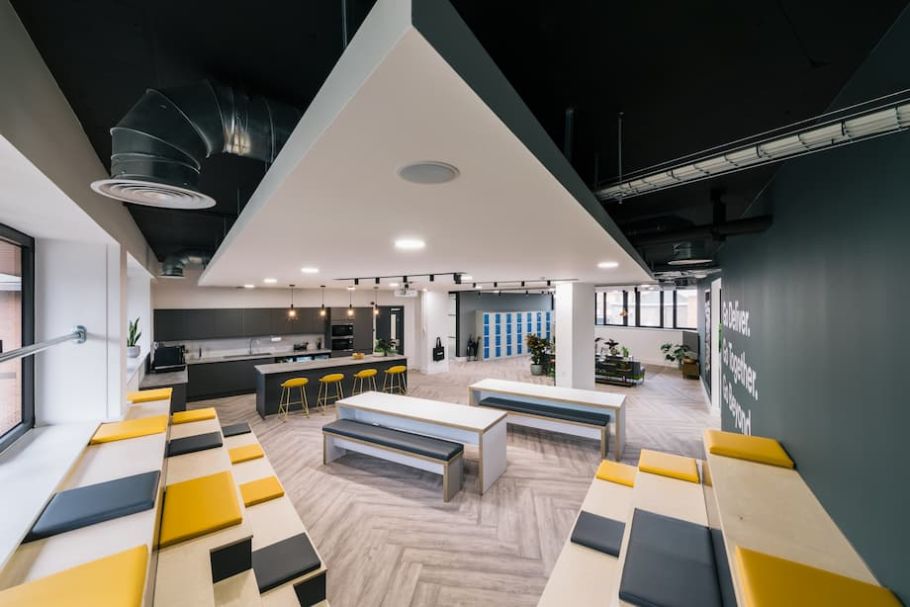
Even the most ambitious workplace project has constraints.
Floor area, budget, existing building conditions and differing stakeholder priorities all influence what can be achieved. The challenge is to understand these limitations early enough for them to inform the solution rather than compromise it later.
More space doesn’t automatically create a better workplace.
A smaller, carefully planned office can often outperform a larger environment with underused rooms and inefficient layouts.
Workplace audits and early space planning can identify where you can create the most value. Multi-purpose environments, acoustic booths, modular furniture and better storage may allow an existing floor plate to accommodate significantly more useful workplace settings.
Prioritising investment around the areas that matter most to employees and the business can also help budgets work harder.
Ask 100 employees what they want from an office and you are unlikely to receive one answer.
Employee consultation is valuable because it highlights frustrations, preferences and working behaviours that may otherwise be missed. However, workplace design cannot simply become a collection of individual requests.
Consider feedback alongside occupancy data, organisational objectives, future growth, and practical constraints.
This is where workplace strategy becomes particularly valuable. The objective is to identify patterns within employee feedback and translate them into solutions that support the wider workforce.
No organisation can know precisely how it will operate in five or ten years.
That makes adaptability more valuable than attempting to predict every future requirement.
Flexible furniture, adaptable infrastructure and multi-functional spaces can allow the workplace to respond as teams and technologies change.
This flexibility can also support sustainability by extending the useful life of the fit out. Rather than replacing furniture or undertaking major building work when requirements change, teams can reuse or reconfigure existing elements.
Even a positive workplace transformation can feel disruptive.
Employees may be moving away from dedicated desks, relocating teams or learning to use completely different types of work settings.
Communication therefore needs to begin before the new workplace opens.
Explaining the thinking behind design decisions, involving employees during consultation and showing people how different spaces are intended to be used can make the transition easier.
Employee involvement also helps identify potential problems before decisions become difficult or expensive to change.
The most successful workplace designs don’t rely on a single feature.
It isn’t the living wall, the statement lighting, the collaboration booth or the latest ergonomic chair that makes an environment inspiring. It’s how these elements work together to support people and create a workplace that feels appropriate for the organisation.
Good workspace design gives employees choice. It makes collaboration easier while protecting concentration. It creates comfortable environments for social connection and quieter places for focused work. It considers physical wellbeing, neuroinclusion, technology and future adaptability alongside visual design.
Most importantly, it gives people an environment in which they can do their best work.
At COEL, creating inspiring spaces begins with understanding the people who will use them.
Our workplace designers work closely with clients to understand their organisation, culture, working practices and ambitions before translating these insights into a workplace strategy and interior design.
Whether you’re refurbishing an existing office or relocating to a completely new workplace, our office interior design team can support the complete project journey, from planning and design through to fit-out, furniture and ongoing maintenance.
With more than 30 years of experience creating workplaces, we know an inspiring office must deliver more than visual impact. It needs to work for your people today, represent your organisation and remain adaptable enough to support where the business is heading next.
Prefer an AI Summary?

